
Original bilingual journalism · English & తెలుగు
Modi sets a new clean-power goal: another 500 GW of non-fossil capacity in the next 10 to 11 years
Opening the Bharat Renewable Energy Summit in New Delhi on Monday, the Prime Minister said India has close to 300 GW of non-fossil capacity and will now aim for a further 500 GW.

On Monday, 2 November, Prime Minister Narendra Modi set India a fresh clean-power goal: a further 500 GW of non-fossil capacity within the coming 10 to 11 years. He announced it while opening the Bharat Renewable Energy Summit & Expo 2026 at New Delhi’s Bharat Mandapam. “This target is somewhat difficult,” he said, but added that he trusted the country: “We will do it!”
The four-day summit runs until 5 November, alongside the ninth Assembly of the International Solar Alliance and the fourth International Conference on Green Hydrogen.
Where India stands now
Modi measured the new goal against the promise India made at the COP-26 climate conference in 2021, a 2030 target of 500 GW of non-fossil capacity. Close to 300 GW of that is in place, he said, and in 2025 India honoured its Paris pledge of a half share for non-fossil sources in installed power capacity, five years early.
He framed the push as a matter of security. The West Asia crisis, he said, had shown that economic security cannot be separated from energy security, and a world leaning on fossil fuels, whose reserves are limited and held by a few regions, will keep facing shocks. A decade of clean-energy spending had spared India a far harder time, he added.
He put investment in the sector over ten years at more than Rs 15 lakh crore, about $164 billion, nearly Rs 6 lakh crore of it since the RE-INVEST summit of 2024, and estimated the opportunity before the decade is out at over Rs 20 lakh crore, roughly $220 billion.
From rooftops to field bunds
The PM Surya Ghar Muft Bijli Yojana, which began in February 2024 with a target of one crore homes, has signed up over 65 lakh households, Modi said, citing a study that found their power bills down by about 76 per cent. Over 30 lakh farmers run solar irrigation under the KUSUM scheme, and panels on more than 44,000 government buildings save around Rs 700 crore a year.
Capacity to make solar modules has risen from roughly 2 GW ten years ago to more than 200 GW, with nearly 40 GW of cell capacity, he said. The next phase of the Green Energy Corridor transmission network carries an investment target of about Rs 2 lakh crore, and the green hydrogen mission aims at 50 lakh tonnes by the end of the decade.
He urged that schools, colleges, hospitals, government offices and street lights be moved to solar power, asked farmers to put panels on idle plots and the bunds between fields, and called on startups and IITs to design homes that cook and charge electric vehicles on rooftop solar, backed by battery storage made in India.
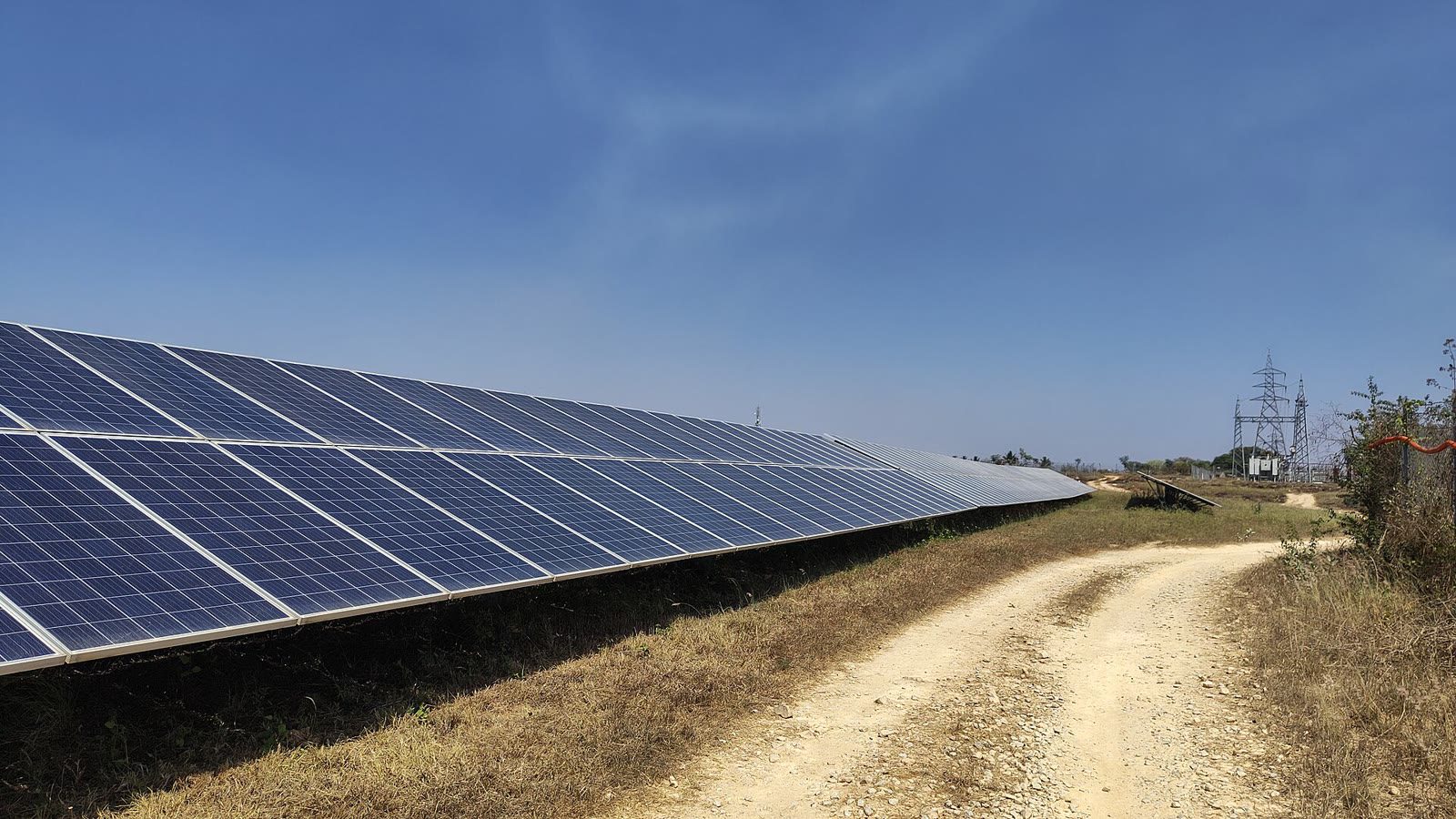
Representative image. Photo: Manjunatha G, WELL Labs / CC BY-SA 4.0 via Wikimedia Commons
More Stories
 NationalOBC creamy layer: Supreme Court refuses Centre two more years, says March ruling will govern civil services 2025 allocation
 NationalSupreme Court: 24-hour deadline to produce a detained person before a magistrate starts at detention, not at formal arrest
 NationalVande Bharat occupancy hits 99.1% in 2025-26 as the Thiruvananthapuram-Mangaluru train runs 189% full
 NationalBombay High Court tells Election Commission to restore Goa voters dropped in SIR despite filing Form 8 for an address change
 NationalFodder security: Centre lists 22 VB-G RAM G works for pastures, cattle sheds and milk centres
 NationalAgnipath revamp: Cabinet gives 75% of Agniveers a two-year second tour and a route to regular service