
Original bilingual journalism · English & తెలుగు
Fodder security: Centre lists 22 VB-G RAM G works for pastures, cattle sheds and milk centres
A joint advisory from the Rural Development and Animal Husbandry departments picks 22 of the 375 works allowed under the 125-day rural employment law and asks States to lift spending on them to a floor of 5% of the programme.

Rural households that take up wage work under the new employment guarantee can be put to growing fodder, laying out village pastures and building cattle sheds, the Centre has told every State and Union Territory in a push against fodder scarcity. The Department of Rural Development and the Department of Animal Husbandry and Dairying sent a joint advisory on fodder security under the Viksit Bharat-Guarantee for Rozgar and Ajeevika Mission (Gramin) Act, 2025, or VB-G RAM G, and the Ministry of Rural Development made it public on Thursday, 5 November.
The Act replaced the Mahatma Gandhi National Rural Employment Guarantee Act on 1 July 2026 and promises every rural household 125 days of paid work a year. The Ministry said the fodder advisory is aimed chiefly at landless families and at small and marginal farmers who earn their living from cattle and milk.
22 works out of 375
Of the 375 kinds of work allowed under the Act, the advisory singles out 22 that serve livestock. They include fodder cultivation on individual and community land, development of pastures, grazing land and silvipasture, and fodder banks, storage sheds and silage units. Sheds for cattle, goats, pigs and poultry can be built or repaired, along with community milk collection centres, community veterinary health centres and cattle troughs, while individual households can get Azolla tanks.
States are encouraged to raise spending on these works in steps until they take at least 5% of everything spent under the programme, where local needs and approved plans support it. Gram Panchayats in which more than 30% of people depend on livestock may get particular attention. Fodder plans drawn up for each State by the ICAR-Indian Grassland and Fodder Research Institute can guide planning at district and block level, and the advisory lists perennial grasses, suitable fodder varieties and mixed crop-livestock farming as options that can stand up to harsher weather.
Gram Sabha to approve the plans
The works are meant to go into each village’s Viksit Gram Panchayat Plan, which the Gram Sabha clears. Every State is also asked to prepare a State Action Plan for fodder and livestock infrastructure that brings its Rural Development, Animal Husbandry and Agriculture departments to one table.
The usual rules of the Act still apply: a compulsory social audit, a 40% ceiling on the material component at district level, weekly public disclosure, a grievance redressal system, and selection of individual beneficiaries as laid down in Schedule I. States have been asked to send the advisory down to the departments concerned, to field staff and to the Panchayati Raj Institutions that will plan the works.
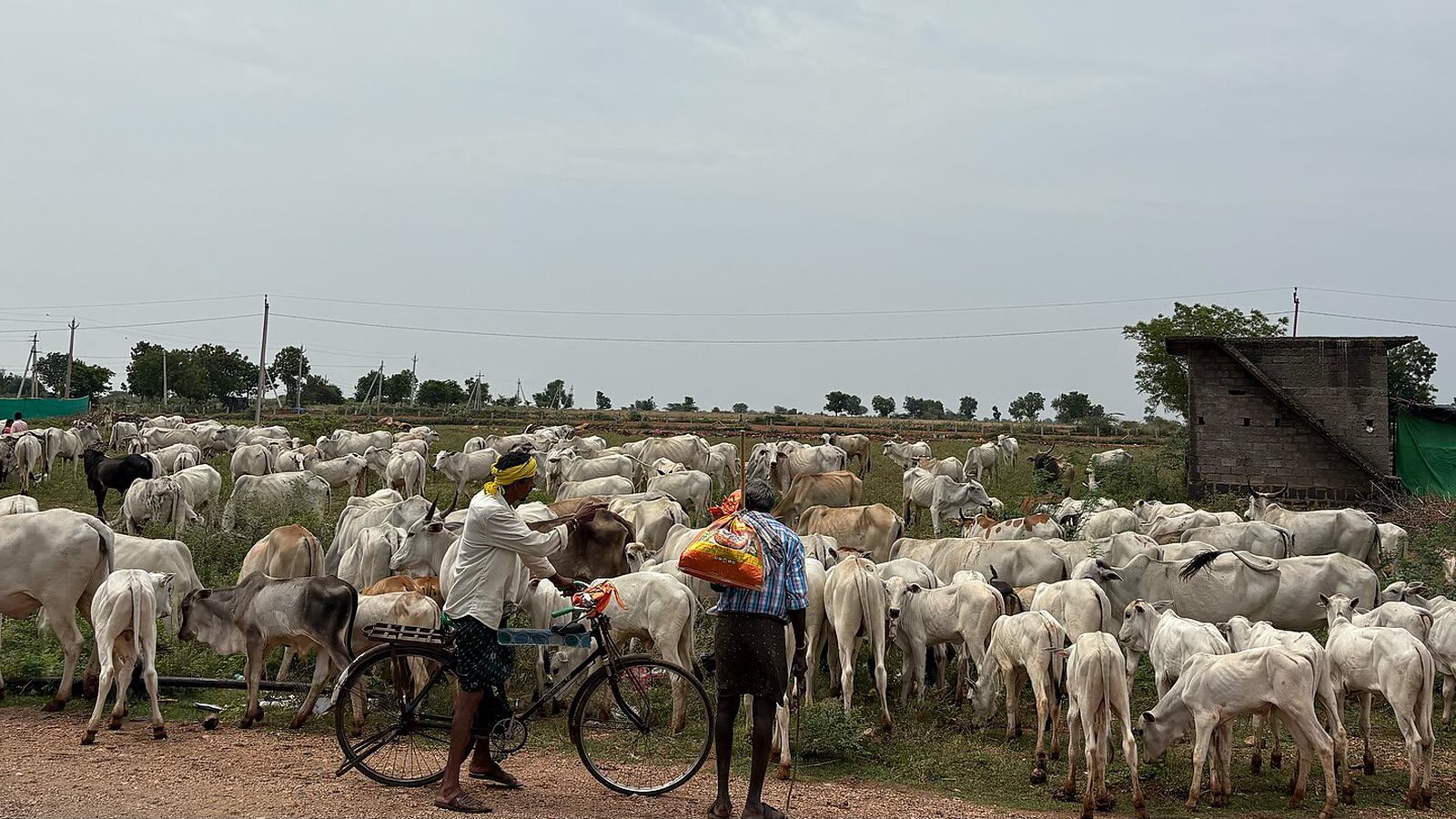
Representative image. Photo: Shagil Muzhappilangad / CC BY-SA 4.0 via Wikimedia Commons
More Stories
 InternationalCOP31: India yet to back Türkiye’s ’35 by 2035′ electrification goal, says targets must respect national circumstances
 NationalIndian Navy frees hijacked fishing vessel Azini off Somalia; all 20 crew safe after 48-hour operation
 NationalModi sets a new clean-power goal: another 500 GW of non-fossil capacity in the next 10 to 11 years
 NationalCentre sets up a National Social Security Board for gig and platform workers, with the Labour Minister in the chair
 NationalFive shot dead at a Guwahati hotel: owner and her son among the victims as leaseholder is arrested within the hour
 NationalTheni jailbreak: 17 remand prisoners fake a seizure, beat up warders and escape; four caught, 13 still out