
Original bilingual journalism · English & తెలుగు
Cracker injury to the eye this Diwali: what to do, and how Hyderabad’s 108 ambulances are now equipped
Hyderabad's 108 ambulances now carry eye trauma kits and crews trained for first aid, launched on 21 October ahead of Diwali on 8 November. Doctors' advice is simple: do not rub the eye, and get medical help at once.

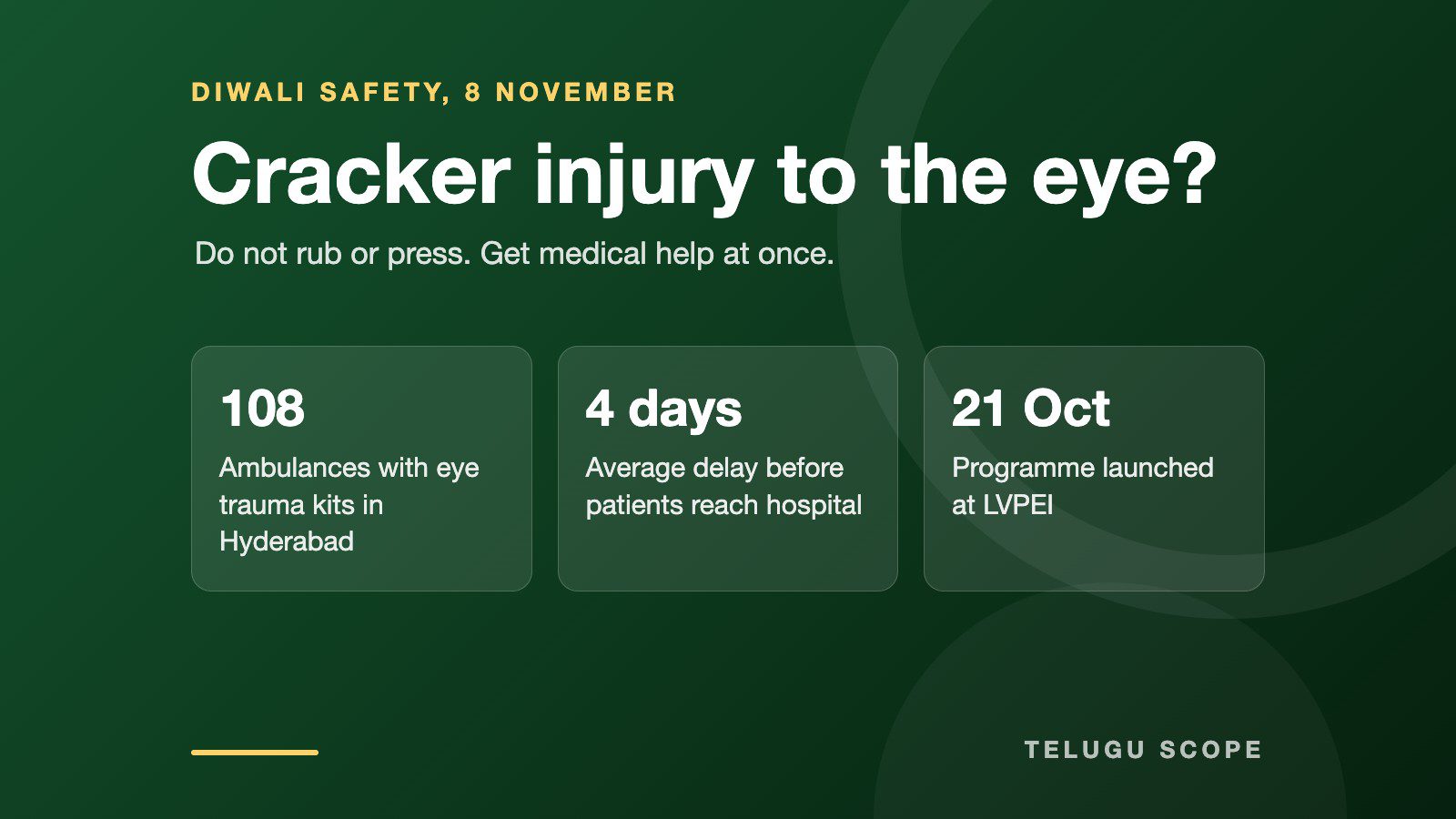
Hyderabad’s 108 emergency ambulances are now equipped to handle eye injuries, just as the festival season brings the year’s highest risk of them. A programme launched on 21 October at L V Prasad Eye Institute (LVPEI) adds eye trauma to the emergencies covered by the 108 service, with Diwali due on 8 November.
The initiative was started jointly by K Krishnam Raju, Director of EMRI Green Health Services (EMRI GHS), which operates the 108 ambulances, and Dr Gullapalli N Rao, Founder Chair of LVPEI. Sarojini Devi Eye Hospital is the third partner. The organisers describe it as the first of its kind in India.
What to do if a cracker injures an eye
- Do not rub the eye and do not press on it.
- Seek medical attention immediately. Do not wait to see whether the pain settles.
- Take the injured person to an eye hospital, or ask for the 108 ambulance service, whose crews are now trained for this.
The urgency matters. Organisers said patients currently take an average of four days to reach a hospital after an eye injury, a delay that can seriously reduce the chance of recovering vision. Eye injuries are at their peak around Diwali, which is why the launch was timed for the festival.
What the 108 service has changed
Eye trauma kits have been provided to the 108 ambulances operated by EMRI GHS during the pilot phase. The emergency medical technicians (EMTs) on these ambulances have been trained to give first aid for eye trauma before referring the patient to a specialised eye hospital.
The programme also covers Emergency Response Officers, who take the calls, and EMS instructors, who train crews, in recognising eye trauma and managing it in the first minutes. Eye trauma has been added to the list of emergencies handled at the 108 Emergency Response Centre.
Several pieces are still to come. Standard operating procedures for call handling, triage and care before reaching hospital are to be developed, along with referral pathways to specialised eye care. Data will be collected and evaluated to judge how the pilot performs. The rollout begins in Hyderabad.
The hospital’s role
Sarojini Devi Eye Hospital, the public eye hospital at Mehdipatnam, will support coordinated management of eye injuries and help patients get treatment within the public healthcare system. Doctors from the hospital and LVPEI attended the launch, including Dr Pravin K. Vaddavalli of LVPEI’s Universal Cornea Care Mission and the head of ophthalmology at Sarojini Devi.
A note for families
The kits and training improve the first response, but they are not a substitute for prevention or for a specialist. No separate eye-injury helpline has been announced; the number involved is the existing 108 ambulance service. Because the procedures for routing such calls are still being written, the safest course after any firecracker injury to the eye is to head for an eye hospital without delay, rather than treat the injury at home.
Illustration: Telugu Scope
More Stories
 MoviesJailer 2 nears Rs 400 crore in eleven days as the second weekend holds
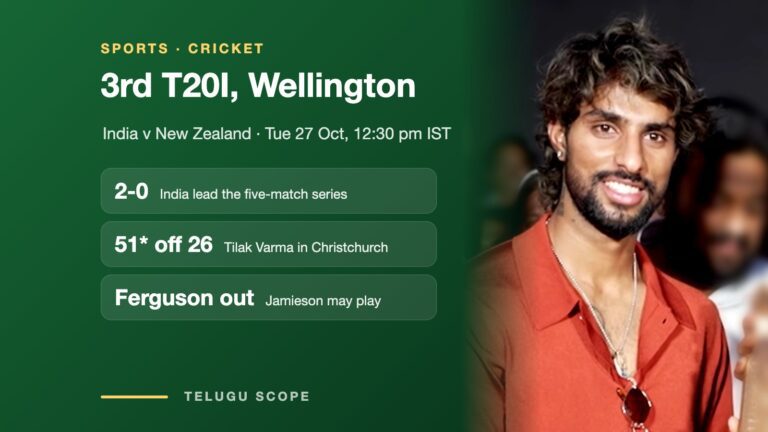 SportsA series on offer in Wellington: India and New Zealand meet in the third T20I on 27 October
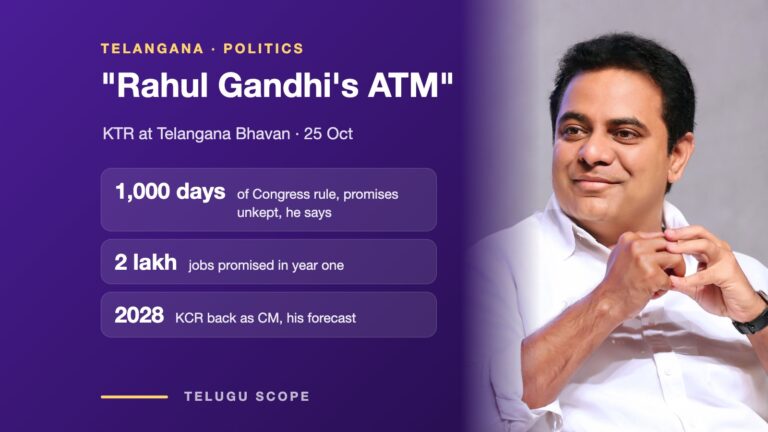 Telangana“Telangana is Rahul Gandhi’s ATM”: KTR counts a thousand days of unkept promises
 Andhra PradeshFresh nominations in four towns only, and municipal polling moves to 1 November
 Andhra Pradesh“Criminal litigant”: Naidu turns on Jagan with videos, a booklet and a set of numbers
 Telangana148 or 152 metres? Revanth Reddy takes the Tummidihatti file to Fadnavis in Mumbai