Original bilingual journalism · English & తెలుగు

Hormone-disrupting chemicals can reach babies in the womb, says UNEP-WHO review
The first global review since 2012 finds stronger evidence linking chemicals used in plastics, cosmetics and pesticides with effects on fertility, brain development and metabolism.

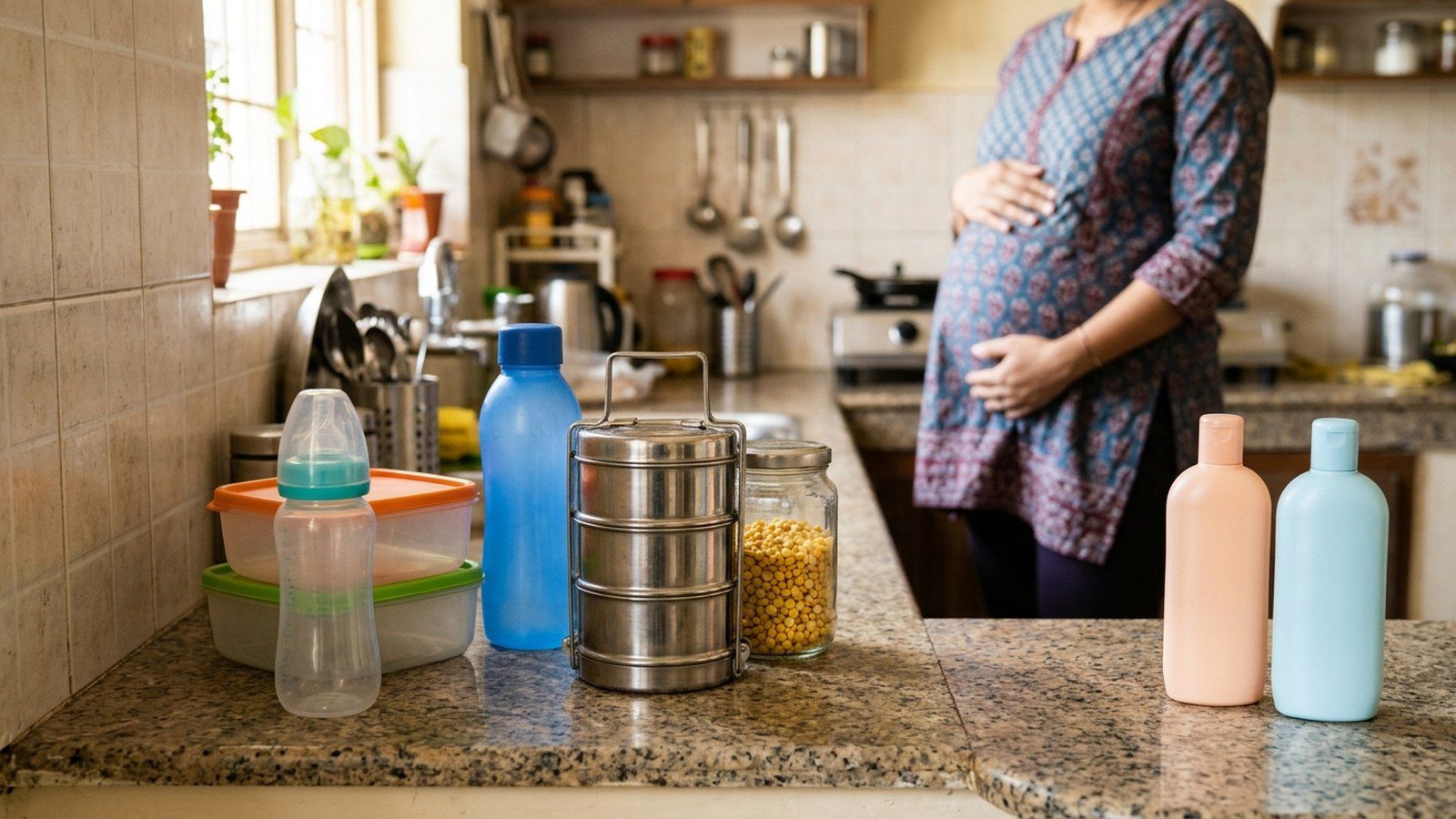
Chemicals that tamper with the body’s hormone signals can reach a child in the womb, and the evidence of harm from these hormone-disrupting chemicals has grown over ten years and more of research, the United Nations Environment Programme (UNEP) and the World Health Organization (WHO) said on Tuesday, 17 November.
Their State of the Science on Endocrine-Disrupting Chemicals 2026, the first full global review since the agencies’ 2012 assessment, says the substances have turned up in human blood, breast milk and umbilical cord blood. Exposure early in life, at times in the womb, can leave lasting effects on how the brain develops, on growth and on reproductive health.
Where the evidence has firmed up
The review finds firmer links between exposure and fertility, the development of reproductive organs, the brain and nerves, the thyroid and other hormones, metabolism, immunity, and the heart and blood vessels. Metabolic liver disease, and a possible impact on the kidneys, are newer concerns, though the agencies say key gaps in the science remain.
They are not one family. WHO says they are used mainly in plastics, from toys and packaging to medical devices, and in personal care products and pesticides. Bisphenol A (BPA), the phthalates and PCBs (polychlorinated biphenyls) are the best-known examples. Over 350,000 chemicals and mixtures are on registers for manufacture and use worldwide, and only a small share has been checked for hormone effects. People meet them in combination, while many regulators still judge each substance on its own.
“Many exposures to these chemicals happen through everyday products,” said Sheila Aggarwal Khan, who heads UNEP’s Industry and Economy Division. Bruce Gordon, acting director of WHO’s Department of Environment, Climate Change, One Health and Migration, said the evidence underlined the need to make sure chemicals in daily-use goods are safe, “particularly for pregnant women, children and future generations”.
What India’s feeding-bottle rule says
In India, plastic feeding bottles certified by the Bureau of Indian Standards (BIS) under IS 14625:2015 must not contain BPA. Amendments to the standard, set out in BIS guidelines of 6 April 2023, also cap how much of certain substances, including the phthalate DEHP, may leach out, and the unamended version could run alongside only until 14 September 2023.
WHO notes that the report cites cases where damage from older chemicals of this kind was reversed after regulators cut contamination, and that people can switch to other materials when given the right information. A companion UNEP paper lists steps for policymakers in food packaging, toys, cosmetics, clothing, health care, farming, medicines and waste. Both were released in Geneva at the inaugural international conference under the Global Framework on Chemicals, which began on 16 November and closes on Friday, 20 November.
Telugu Scope illustration.
More Stories
 LifestyleIITF health pavilion: TB screening, CPR demos and a screen-free kids’ zone in Delhi
 LifestyleSHATAYU portal lists 30,151 trained caregivers for the elderly; search and callback free
 LifestyleWorld Diabetes Day: high blood sugar climbs in AP and Telangana, NFHS-6 shows
 LifestyleWHO Global TB Report 2026: India cuts TB deaths 38% but has about a quarter of all cases
 LifestyleNFHS-6 child nutrition: stunting falls in AP and Telangana, but few toddlers get an adequate diet
 LifestyleWorld Pneumonia Day: count a child’s breaths for one minute, and know the signs that need a hospital