
Original bilingual journalism · English & తెలుగు
Andhra’s municipal vote: the alliance’s first big test in the towns, fought as much in court as at the booth
Five years after the YSRCP swept Andhra Pradesh's towns, 100 urban bodies vote on Sunday under a government that has changed hands. Some seats are already decided, a Supreme Court fight is behind both sides, and the counting on 3 November will show how the towns read the alliance's first two years.

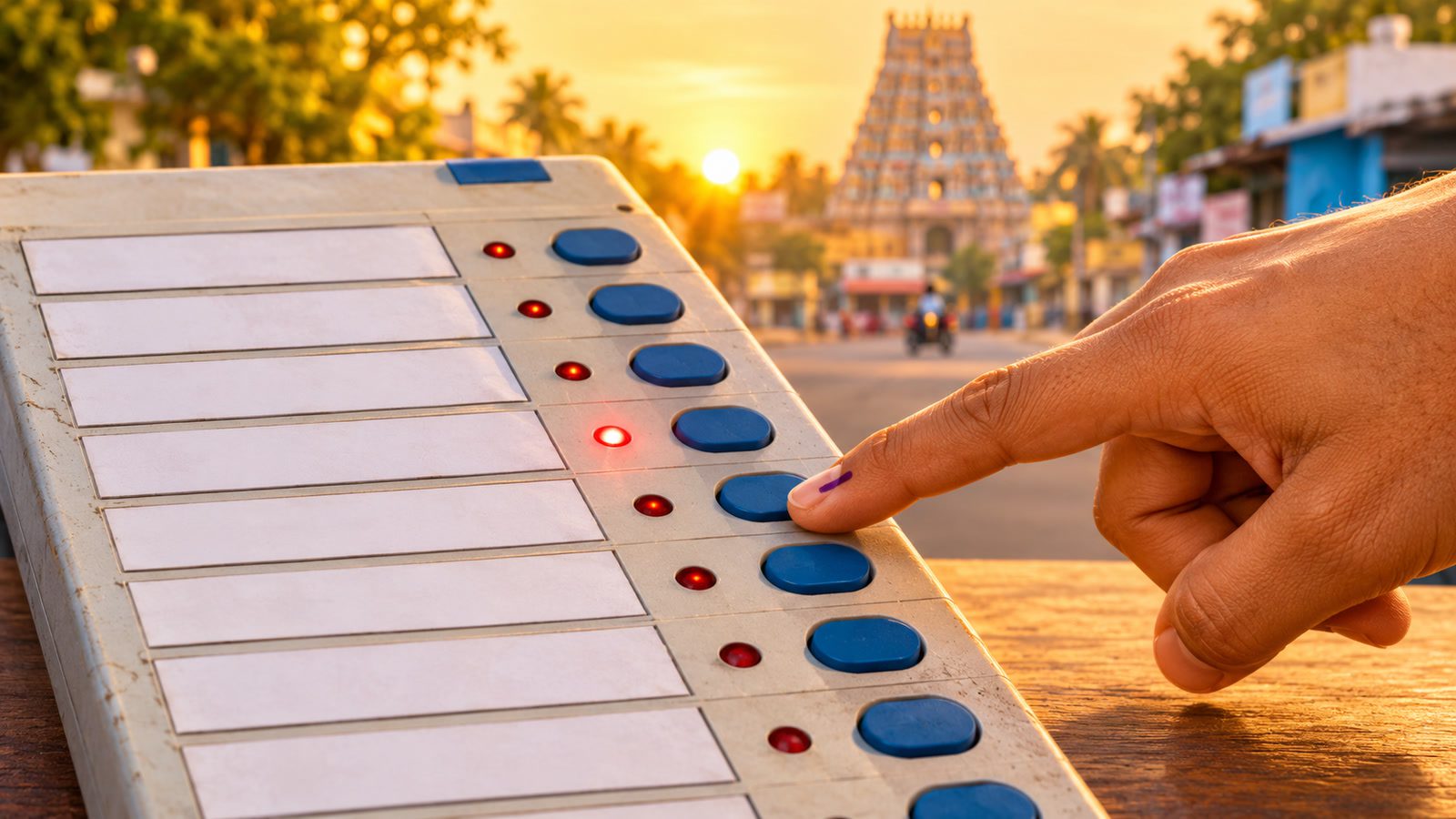
When Andhra Pradesh’s towns last voted, in March 2021, the result was close to a clean sweep. The YSRCP, then in power, won all 11 municipal corporations whose votes were counted and the large majority of municipalities, and the TDP came away with only a few towns. On Sunday, 1 November, voters in 100 urban bodies go to the polls again, this time under the government that replaced Jagan Mohan Reddy’s in 2024.
The vote covers 13 municipal corporations and 87 municipalities and nagar panchayats, from 7 am to 5 pm. Votes are counted on 3 November. Mayors and municipal chairpersons will be elected later by the winning councillors.
An alliance that shares the map
The TDP, the Jana Sena and the BJP are contesting together, as they did in the 2024 Assembly election that gave them 164 of the 175 seats. They have divided the leadership posts in 123 urban bodies: 89 for the TDP, 25 for the Jana Sena and 9 for the BJP. Among the corporations, the Jana Sena has Srikakulam, Kakinada, Eluru and Vijayawada, and the BJP has Rajahmundry and Anantapur. The YSRCP is fighting alone.
Part of the result is already in
Not every seat will see a vote. In the 13 corporations, 118 of the 922 divisions went to candidates who faced no rival. Seventeen chairperson posts were settled the same way, 15 of them for the TDP and one each for the Jana Sena and the BJP. In Pidugurallu, Dachepalli, Proddatur, Kamalapuram and Rayachoti, every ward was decided without a contest, so there will be no polling at all.
The fight over nominations
How those seats came to be uncontested is the sharpest dispute of this election. In the Supreme Court, the YSRCP said its people had been beaten, threatened or blocked from reaching the offices where nominations were filed from 16 to 18 October, naming Punganur, Rayachoti, Kadapa and Tirupati. On 21 October the court told the poll panel to look at that material. The commission then accepted that some would-be candidates had faced threats or assault or seen their papers torn up, and gave two more days to file nominations in four bodies: the Kadapa and Tirupati corporations and the Rajampet and Mydukur municipalities.
When the case returned on 27 October, the Supreme Court closed it. Chief Justice Surya Kant’s bench held that the claims raised disputed facts that could not be settled at that stage, asked the party to fight the polls instead, and said any candidate who was stopped could still go to an election tribunal through an election petition. The High Court will keep an eye on the process, and earlier orders on CCTV recording at offices stay in force.
The TDP rejects the charge. Senior TDP leader Devineni Uma Maheswara Rao says it was the YSRCP that stopped TDP candidates in Pulivendula, Rayachoti and Proddatur and that the opposition is trying to derail the elections because it expects to lose. According to him, district Collectors and police superintendents are sending reports on the complaints to the poll panel.
Pulivendula and the YSRCP’s home ground
Nowhere is the contest more personal than in Pulivendula, Jagan Mohan Reddy’s own constituency. Kadapa MP Y.S. Avinash Reddy has taken a complaint against the local police to the poll panel and has demanded webcasting of every polling station, alleging that outsiders have been brought in to vote. Neither the police nor the government has responded publicly to the latest charge.
What the count will show
When the votes are counted on 3 November, three things will stand out: how much ground the YSRCP holds in the towns it swept five years ago, how the Jana Sena and the BJP do in the corporations the alliance handed them, and how the turnout in contested wards compares with the number of seats that never went to a vote. Rural voters follow on 5 November, when MPTC and ZPTC seats go to the polls, with counting on 7 November. Corporation-wise results will be on the Telugu Scope results page.
Telugu Scope illustration.
More Stories
 Andhra PradeshVoter list revision: Telangana gets till 26 November and Andhra Pradesh till 20 November to settle claims; final rolls in both states on 30 November
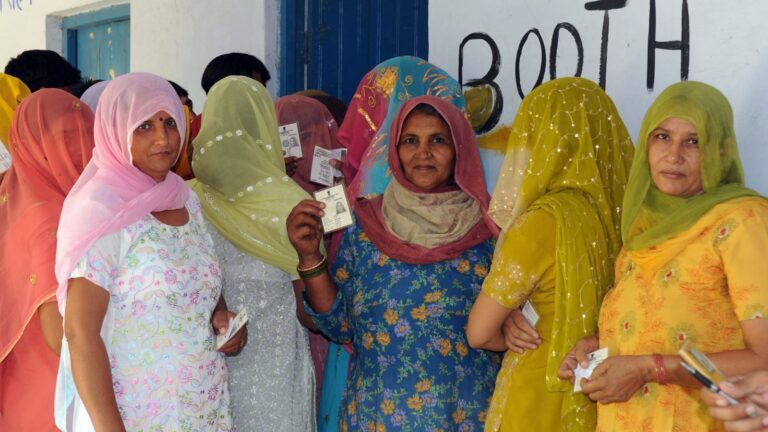 Andhra PradeshAP municipal polls on Sunday: 7 am to 5 pm in 13 corporations and 87 towns, 36,351 police on duty, counting on 3 November
 Andhra PradeshGSLV-F18 puts NavIC satellite NVS-03 in orbit from Sriharikota; India’s navigation fleet back to four working satellites
 Andhra Pradesh79 years after Independence, why is a poor person’s nomination still so feared?
 Andhra PradeshNew low over Andaman Sea may become a depression around 31 October and head for the Andhra Pradesh coast; IMD warns of very heavy rain on 2-3 November
 Andhra PradeshAP cabinet clears 48 items and backs full relief for Cyclone Arnab victims; Naidu tells ministers to suspend local-poll rebels