Original bilingual journalism · English & తెలుగు
World Diabetes Day 2026: more than four in ten people with diabetes are undiagnosed, WHO says; India has 8.98 crore adults with the disease
World Diabetes Day falls on Saturday, 14 November, with the theme "Early action on diabetes". WHO says more than 40% of people with the condition are undiagnosed; India has 8.98 crore adults living with it.

World Diabetes Day 2026 falls on Saturday, 14 November, and the World Health Organization (WHO) is building it around one figure: more than 40% of the people who have diabetes do not know it. The theme, “Early action on diabetes”, asks people to learn the warning signs and seek a test early.
The signs on WHO’s list are ordinary ones: being unusually thirsty, passing urine often, feeling tired, blurred vision and losing weight for no clear reason. Anyone who notices them should see a doctor instead of waiting, the agency says in its campaign note. Type 1 diabetes tends to come on quickly and can start at any age; WHO says it is often missed or mistaken for something else, especially in adults. Type 2 builds slowly and may show little or nothing on the surface.
India’s share: 8.98 crore adults
The International Diabetes Federation (IDF) counts 8.98 crore Indian adults with diabetes in 2024, or 10.5% of the adult population. Across the world the federation’s figure is 589 million, of whom 107 million live in its South-East Asia region; it projects 185 million for the region by 2050.
The Indian Council of Medical Research’s INDIAB survey, published in June 2023, covered 1.13 lakh adults in 31 states and union territories. It found diabetes in 11.4% of them and prediabetes in 15.3%.
The IDF, which announced “early action” as a two-year theme on 4 March 2026, says almost one in two people with diabetes worldwide remains undiagnosed and one in eight people is at high risk of type 2. Early detection, it says, can prevent or delay complications of the heart, kidneys, eyes and nerves.
A 2030 target, and what India offers
WHO’s member states have agreed that 80% of all those who have diabetes should be diagnosed by 2030, one of five global coverage goals for the disease. A diagnosis helps only if affordable care follows, the agency says, and it wants governments to make early detection part of primary health care and to widen access to insulin.
In India, the National Health Mission’s programme for non-communicable diseases provides for screening for diabetes, high blood pressure and common cancers at every level of the public health system, starting from the sub-centre, with frontline health workers carrying out population-based checks.
WHO says four habits can prevent or delay type 2 diabetes: a healthy diet, regular exercise, weight kept in the normal range and no tobacco. The “early action” theme will stay in place for World Diabetes Day 2027 as well.
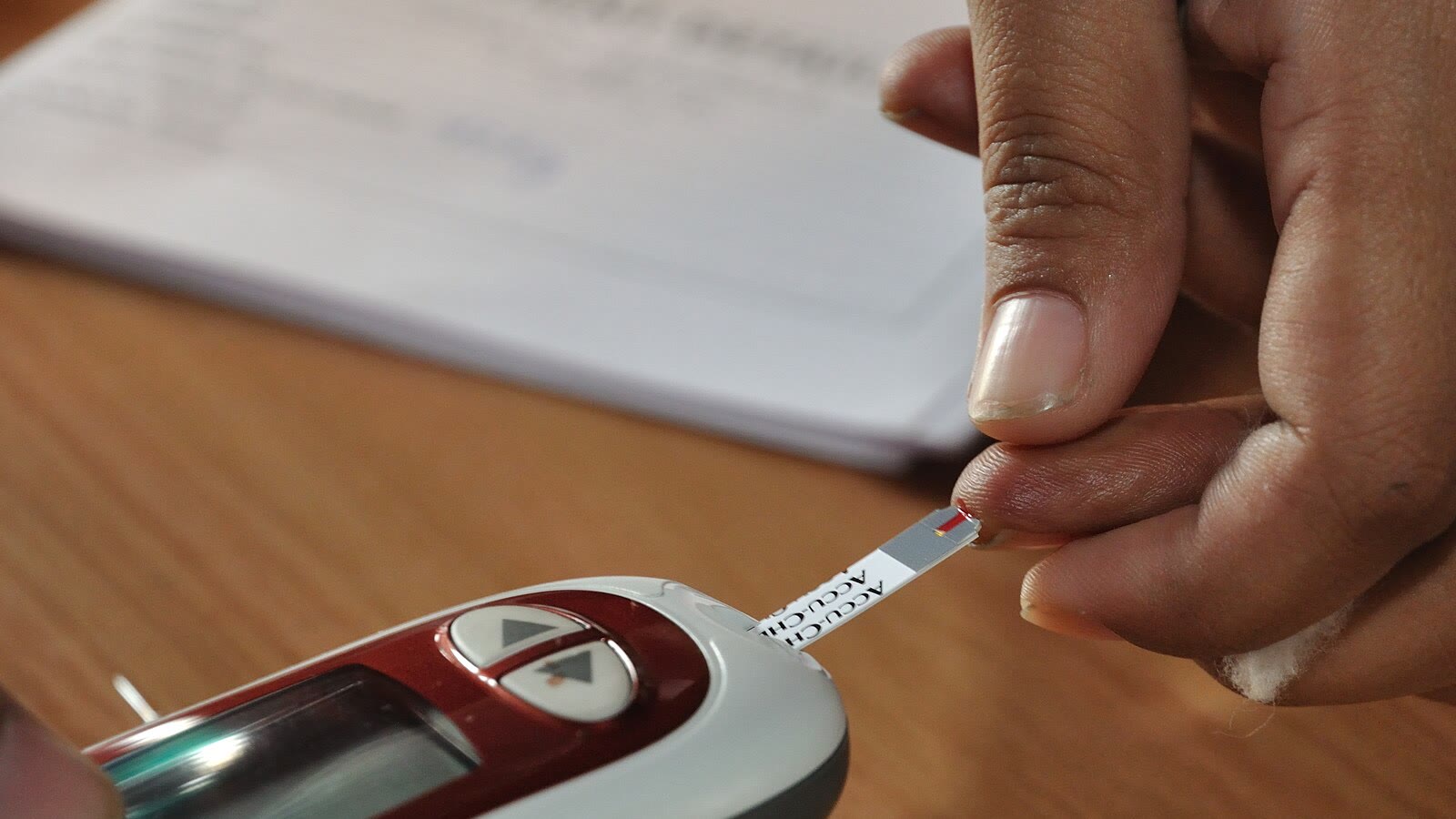
Representative image: a blood glucose test with a finger-prick meter. Photo: Biswarup Ganguly / CC BY 3.0 via Wikimedia Commons
More Stories
 LifestyleFSSAI festive drive: 3,280 tonnes of paneer, ghee, sweets and other food seized; 1,133 licences suspended
 LifestyleDeepavali air quality: Hyderabad’s AQI rose from 82 to 116 after the 2025 festival, Visakhapatnam’s from 44 to 113
 LifestyleDeepavali night safety: Visakhapatnam allows crackers only from 8 pm to 10 pm; first aid and the numbers to call
 LifestyleDeepavali burn care: Health Ministry says cool water for 10 to 20 minutes, no ice or toothpaste
 LifestyleDiwali firecracker eye injury: LV Prasad Eye Institute’s do’s, don’ts and first aid
 LifestyleKalka-Shimla toy train to get hydrogen engine: Railways picks Barog for fuel plant on UNESCO heritage line