
Original bilingual journalism · English & తెలుగు

Captive-bred vulture released in Melghat flies 10,767 km and is sighted in Latur
A seven-year-old Indian vulture, bred in captivity and released in the Melghat Tiger Reserve this year, was sighted in Maharashtra's Latur district on 18 November after covering 10,767 km since 28 May; forest officials confirmed its identity from its leg bands.

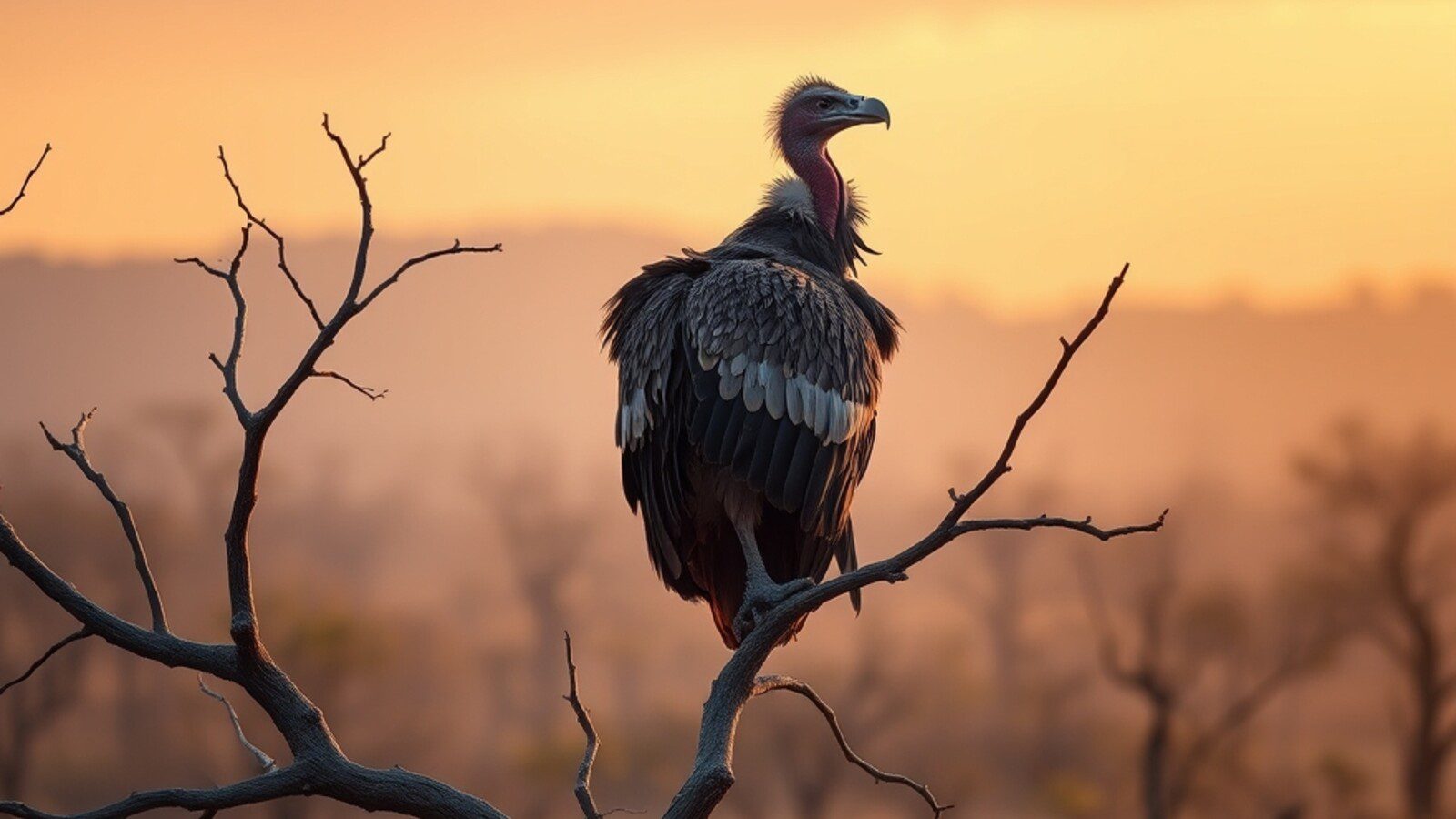
A seven-year-old Indian vulture that was bred in captivity and released into the wild this year has been sighted in Maharashtra’s Latur district after flying 10,767 km. It was seen on 18 November in Ausa tehsil and was reported by wildlife enthusiast Abhijit Rasal; wildlife enthusiasts said it was the first documented appearance of the species in Latur district.
At 5.30 am the next day, a team including Deputy Conservator of Forests Amitraj Jadhav, observer Dhananjay Gutte and Dr Datta Ambekar found the bird perched in a tree and confirmed its identity from its leg bands. It is a female tagged F14/M99, fitted with a satellite transmitter and coloured leg bands.
Where it has been
The vulture was bred at the Bombay Natural History Society’s centre in Pinjore, Haryana, and was one of 15 vultures released earlier this year into the Somthana forest range of the Melghat Tiger Reserve under a rehabilitation programme. Tracking data show that between 28 May and 20 November it covered 10,767 km, with stops at Akot, Malkapur, Nashik, Thane and Pune in Maharashtra and Vijayapura in Karnataka before it reached Latur.
Why it matters
The Indian vulture (Gyps indicus) is listed as critically endangered on the IUCN Red List. Its numbers fell sharply mainly because of diclofenac, a veterinary anti-inflammatory drug that causes fatal kidney failure in vultures that feed on treated cattle. Experts called the sighting an important indicator of the success of vulture rehabilitation programmes, since it shows that captive-bred, released birds can survive and join wild populations.
Telugu Scope illustration.
More Stories
 NationalAmit Shah calls for tighter Centre-State security coordination in Arunachal Pradesh
 NationalNCB says it busted transnational network that allegedly supplied drugs in the US; six apprehended
 NationalModi inaugurates six-lane Nitish Setu over the Ganga in Vaishali, launches projects worth over Rs 34,000 crore
 BusinessCore industries grow 10.9% in October, led by iron ore, coal and electricity
 LifestyleIndia crosses one crore HPV vaccine doses in under nine months; Andhra Pradesh at 100% of target
 Business16th commercial coal auction draws 83 bids; 20 first-time bidders enter the sector