Original bilingual journalism · English & తెలుగు

Cabinet clears Rs 62,370 crore fertiliser subsidy for rabi, 64% more than a year ago
The Union Cabinet approved about Rs 62,370 crore to subsidise phosphatic and potassic fertilisers in the 2026-27 rabi season, roughly 64 per cent more than for the previous rabi. The rates apply from 1 October.

The Union Cabinet on Wednesday, 11 November, cleared a fertiliser subsidy of about Rs 62,370.02 crore for phosphatic and potassic (P&K) fertilisers in the 2026-27 rabi season. That is nearly Rs 24,418 crore more than the Centre set aside for the same season a year earlier.
The rates, fixed under the Nutrient Based Subsidy (NBS) scheme, run from 1 October 2026 to 31 March 2027. The approval therefore arrives six weeks into the season and covers fertiliser already sold since 1 October as well as the sowing still ahead. The Cabinet met under the chairmanship of Prime Minister Narendra Modi.
How the figure compares
For rabi 2025-26, the Cabinet had approved about Rs 37,952.29 crore on 28 October 2025. The new estimate is roughly 64 per cent higher. It is also about Rs 20,836 crore, or close to half, above the Rs 41,533.81 crore cleared in April for the kharif 2026 season, which closed on 30 September.
The government tied the revision to recent shifts in world prices of fertilisers and of inputs such as urea, di-ammonium phosphate (DAP), muriate of potash and sulphur. The Cabinet release gave only the total. It did not publish the per-kilogram subsidy for nitrogen, phosphorus, potash or sulphur, which are paid out as approved and notified rates.
What it means for farmers in AP and Telangana
The money does not reach farmers’ bank accounts. It is paid to manufacturers and importers, who in turn sell 28 grades of P&K fertiliser, DAP and the NPKS complex grades among them, at subsidised prices. Urea is outside this decision.
In Andhra Pradesh the season is known as rabi and in Telangana as yasangi. Both fall inside the October-to-March window, so every bag of DAP or complex fertiliser bought for these crops is priced on the rates the Cabinet has now approved.
The NBS scheme has governed P&K subsidies since 1 April 2010, with fresh rates fixed for each kharif and rabi season. The rabi 2026-27 rates stay in force until 31 March 2027.
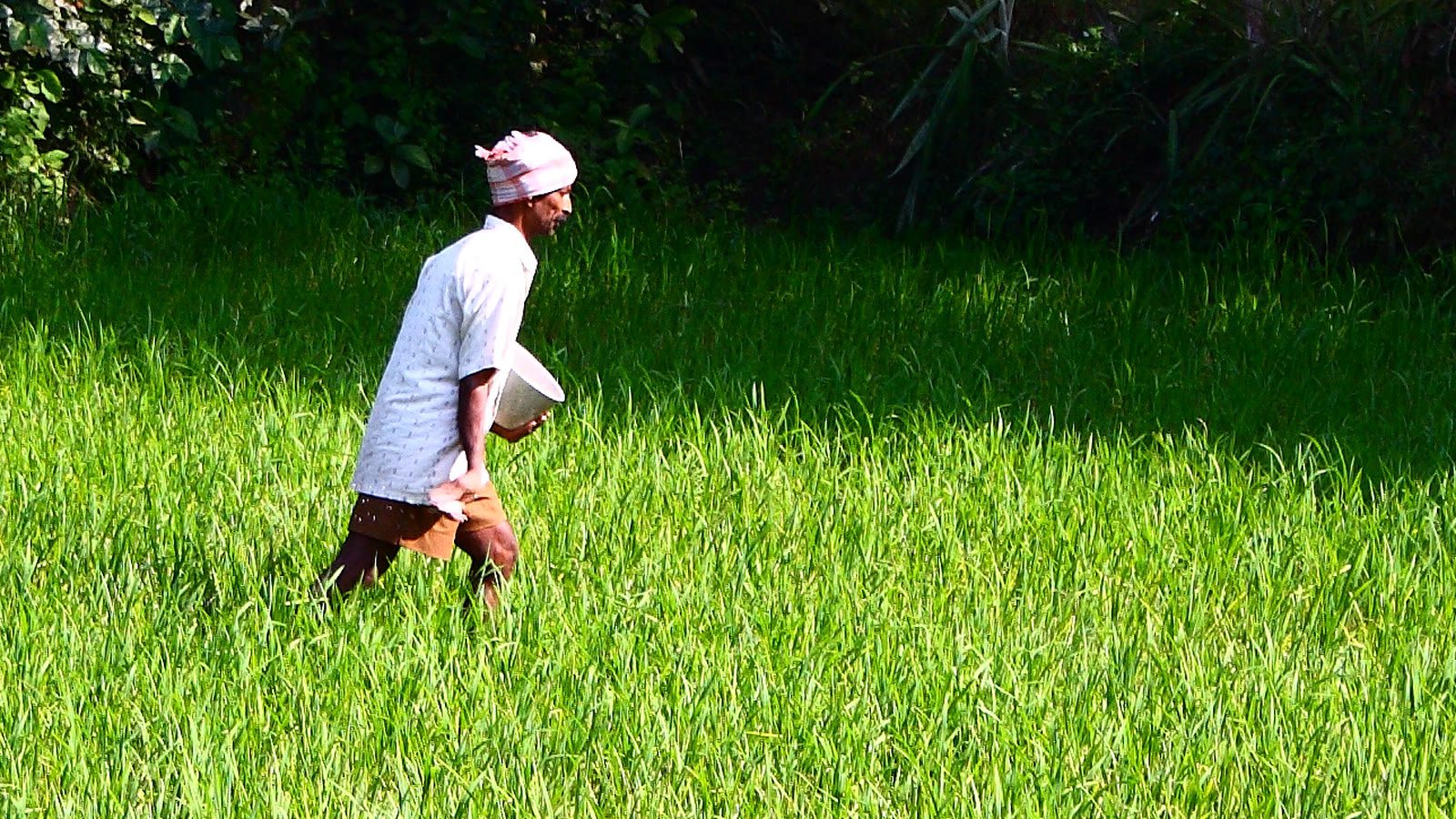
Representative image: a farmer spreads fertiliser in a paddy field in East Godavari district, Andhra Pradesh. Photo: kiran kumar / CC BY-SA 2.0 via Wikimedia Commons
More Stories
 NationalNational Lok Adalat: Telangana disposed of 10.09 lakh cases, Andhra Pradesh 4.33 lakh in September; next sitting on 12 December
 NationalModi’s Diwali in Bastar: first with every district free of Naxalism, PM tells jawans; Telangana and Andhra Pradesh lists cleared by 2025
 NationalE20 petrol: Centre says all 893 samples from 27 states and UTs passed, disputes Karnataka’s finding of 26-31% ethanol
 NationalAnti-cancer drug prices fall from Monday, 9 November: 1,031 formulations cheaper, some by 96%
 NationalSIR draft rolls: Election Commission reopens enumeration forms for voters left out in Delhi and six states; Telangana has till 21 November
 NationalBarrier-free tolling: NHAI fixes plaza design for four-lane highways; Hyderabad-Vijayawada and Warangal plazas on the bid list