
Original bilingual journalism · English & తెలుగు
Rasi Phalalu 2026-27: Guru moves into Simha, Rahu-Ketu shift on 5 December; aadayam-vyayam for all 12 rasis
Guru entered Simha on 31 October 2026, the Rahu-Ketu axis shifts on 5 December, and Shani holds Meena for the rest of the Parabhava year. Traditional indications for all 12 rasis, with each sign's aadayam, vyayam, rajapujyam and avamanam.

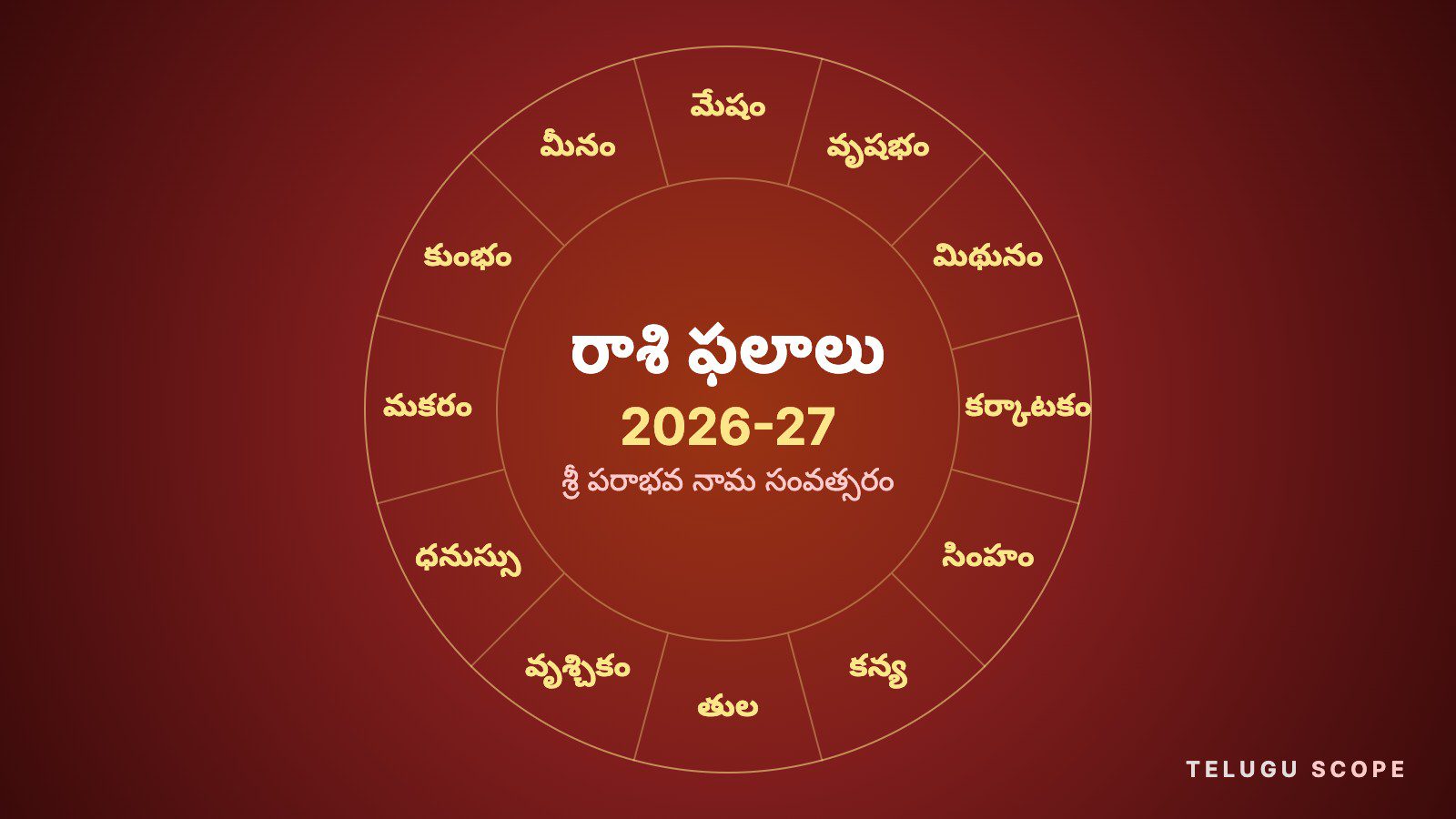
Jupiter, Guru in the Telugu almanac, moved from Karkataka into Simha on 31 October 2026. It is Guru’s second change of sign in the Sri Parabhava year, which began with Ugadi on 19 March 2026; the first came on 2 June, when it left Mithuna for Karkataka. The stay in Simha is brief. On 25 January 2027 Guru turns back into Karkataka in retrograde motion, and stays put until the Parabhava year closes on 6 April 2027.
The nodes move next. On 5 December 2026 Rahu shifts from Kumbha to Makara, and Ketu, which always sits opposite Rahu, from Simha to Karkataka. That date follows the mean node calculation; some panchangams give 6 December. Shani does not change sign at all and spends the whole Parabhava year in Meena. As a result Sade Sati (Elinati Shani) continues for Mesha, Meena and Kumbha, Simha remains under Ashtama Shani, and Dhanu under Ardhashtama Shani.
The readings here are general indications drawn from traditional astrology for every rasi (Moon sign). None of it is a personal horoscope: an individual’s birth chart and running dasha can alter the picture considerably. For a personal reading, consult a qualified astrologer.
The four numbers for each rasi
Ugadi panchangams give every rasi four numbers for the year. Aadayam (income) and vyayam (expenditure) are each scored out of 14, rajapujyam (honour) and avamanam (slights) out of 7. They are broad traditional markers, not sums of money. For Sri Parabhava, which runs from 19 March 2026 to 6 April 2027, the figures are as follows.
| Rasi | Aadayam (1-14) | Vyayam (1-14) | Rajapujyam (1-7) | Avamanam (1-7) |
|---|---|---|---|---|
| Mesha (Aries) | 11 | 5 | 2 | 4 |
| Vrishabha (Taurus) | 5 | 14 | 5 | 4 |
| Mithuna (Gemini) | 8 | 11 | 1 | 7 |
| Karkataka (Cancer) | 2 | 11 | 4 | 7 |
| Simha (Leo) | 5 | 5 | 7 | 7* |
| Kanya (Virgo) | 8 | 11 | 3 | 3 |
| Tula (Libra) | 5 | 14 | 6 | 3 |
| Vrischika (Scorpio) | 11 | 5 | 2 | 6 |
| Dhanu (Sagittarius) | 14 | 11 | 5 | 6 |
| Makara (Capricorn) | 2 | 8 | 1 | 2 |
| Kumbha (Aquarius) | 2 | 8 | 4 | 2 |
| Meena (Pisces) | 14 | 11 | 7 | 2* |
* Panchangams differ on avamanam for two signs: most give Simha 7 and Meena 2, while one gives them 3 and 5.
In the readings below, the rasi itself is the first house and the others follow in order; 5 December falls in 2026 and 25 January in 2027.
Mesha (Aries)
Nakshatra padas: Ashwini 1-4, Bharani 1-4, Krittika 1
From 31 October to 25 January Guru occupies the fifth house, which tradition counts among the kindest stretches of the year: good news about children, progress in studies and fresh ideas that find backing. On 25 January it slips back into the fourth house, where household work and family duties tend to grow and spare time shrinks.
Shani in the twelfth house marks the opening phase of Sade Sati for Mesha, a placement linked with higher spending and more travel; patience and a disciplined routine are the traditional counsel. Rahu, in the eleventh house until 5 December, favours gains and new contacts. From that date it works through the tenth, bringing fresh responsibility at work, while Ketu moves from the fifth house to the fourth.
Vrishabha (Taurus)
Nakshatra padas: Krittika 2-4, Rohini 1-4, Mrigashira 1-2
Shani is Vrishabha’s main source of strength in the Parabhava year. In the eleventh house it is traditionally rated among its best positions, associated with steady gains and the completion of work that had stalled. Guru, fourth from Vrishabha until 25 January and third after that, tends to ask more effort for each result and brings some bustle at home.
Rahu in the tenth house until 5 December points to openings at work; after that, from the ninth, it suggests long journeys. Ketu’s move into the third house on the same date is read as support for courage and small successes. For those who work patiently, the traditional outlook is one of steady results.
Mithuna (Gemini)
Nakshatra padas: Mrigashira 3-4, Arudra 1-4, Punarvasu 1-3
Guru, which spent June to October in the second house, moved into the third on 31 October, and until 25 January tasks may need more effort than usual. When it returns to the second house on 25 January, the traditional promise of family celebrations and rising income returns with it.
Shani in the tenth house is called Kantaka Shani in some panchangams; it is not Sade Sati. Work may bring more responsibility and pressure, though honest, unhurried effort earns recognition, even if late. Rahu is in the ninth house until 5 December and in the eighth after that, a phase in which tradition advises against hasty decisions. Ketu lends courage from the third house until the same date, then moves to the second.
Karkataka (Cancer)
Nakshatra padas: Punarvasu 4, Pushyami 1-4, Ashlesha 1-4
Guru, in Karkataka since 2 June, moved into the second house on 31 October. Until 25 January tradition reads this as good for family happiness and income. On 25 January Guru returns to Karkataka itself. Because Karkataka is Jupiter’s sign of exaltation, its presence in the birth sign is traditionally expected to bring the support and respect of elders.
Shani in the ninth house suggests long journeys and differences of opinion with elders, which calm, patient talk can smooth over. Rahu in the eighth house until 5 December can slow things down. On that date Rahu moves to the seventh and Ketu enters Karkataka, a period in which flexibility in dealings with a spouse or a business partner helps.
Simha (Leo)
Nakshatra padas: Makha 1-4, Pubba 1-4, Uttara 1
Guru stays in Simha itself from 31 October to 25 January, then spends the rest of the year in the twelfth house, a placement linked with spending on auspicious functions, on travel and on other people.
Shani in the eighth house means Ashtama Shani runs through the whole Parabhava year. Work may feel slower and more demanding, and tradition recommends patience and a regular daily rhythm. The turn comes on 5 December, when Rahu moves from the seventh house to the sixth, a change read as favourable for coming out ahead in competition. On the same date Ketu leaves Simha for the twelfth house, which is associated with a lighter mind.
Kanya (Virgo)
Nakshatra padas: Uttara 2-4, Hasta 1-4, Chitta 1-2
Guru favours Kanya in the Parabhava year. After occupying the eleventh house from 2 June, it moved into the twelfth on 31 October, and until 25 January spending on functions and travel is indicated. On 25 January Guru comes back to the eleventh, where it remains for the rest of the year; tradition links this house with gains, help from elders and wishes fulfilled.
Shani in the seventh house, which some panchangams call Kantaka Shani (it is not Sade Sati), calls for patience in partnerships and in married life. Rahu in the sixth house until 5 December favours success in competition; from the fifth after that, closer attention to children and studies is advised. Ketu’s arrival in the eleventh house on that date is another indication of gains.
Tula (Libra)
Nakshatra padas: Chitta 3-4, Swati 1-4, Vishakha 1-3
For Tula, the stretch from 31 October to 25 January, with Guru in the eleventh house, is traditionally the most rewarding part of the Parabhava year. From 25 January Guru drops back into the tenth, which points to changes and new duties at work.
Shani in the sixth house is among the best positions it can hold in the traditional scheme, associated with victories over rivals and the settling of long-pending problems. Rahu, in the fifth house until 5 December and the fourth after that, calls for less haste in thinking and a calm approach at home. Ketu supports gains from the eleventh house until that date, then moves to the tenth.
Vrischika (Scorpio)
Nakshatra padas: Vishakha 4, Anuradha 1-4, Jyeshtha 1-4
Guru moved from the ninth house to the tenth on 31 October, and until 25 January it brings heavier responsibilities at work. Its return to the ninth on 25 January is a welcome change: tradition describes it as a time of good fortune, backing from elders and participation in religious functions.
Shani in the fifth house calls for care and deliberation over children, studies and decisions. On 5 December Rahu moves from the fourth house to the third, a traditionally favourable position associated with courage and success in effort, while Ketu shifts from the tenth to the ninth. Taken together, the closing months of the Parabhava year look brighter for Vrischika than the opening ones.
Dhanu (Sagittarius)
Nakshatra padas: Moola 1-4, Purvashadha 1-4, Uttarashadha 1
Guru, in the eighth house since 2 June, entered the ninth on 31 October, and the period up to 25 January is read as one of relief, good fortune and blessings from elders. On 25 January Guru goes back to the eighth, where work may move more slowly than planned and an unhurried approach serves best.
Shani in the fourth house means Ardhashtama Shani for the whole Parabhava year, with some strain around the home, vehicles and family duties that patience can ease. Rahu in the third house until 5 December supports courage and effort; from the second house after that, care with words is advised. Ketu moves from the ninth house to the eighth on the same date.
Makara (Capricorn)
Nakshatra padas: Uttarashadha 2-4, Shravanam 1-4, Dhanishtha 1-2
Shani carries the year for Makara. In the third house it is traditionally a source of courage, persistence and success in effort, and Makara’s own Sade Sati ended in March 2025, when Shani entered Meena.
Guru is in the eighth house from 31 October to 25 January, a period when work may run late. Its return to the seventh on 25 January is read as favourable for marriage proposals, partnerships and new acquaintances. Rahu stays in the second house until 5 December and then enters Makara itself, a phase in which measured speech and unhurried decisions help. Ketu moves to the seventh house that day as well.
Kumbha (Aquarius)
Nakshatra padas: Dhanishtha 3-4, Shatabhisham 1-4, Purvabhadra 1-3
Guru in the seventh house, from 31 October to 25 January, favours marriage and partnership matters in the traditional reading. From 25 January it returns to the sixth, bringing more competition and responsibility at work.
Shani in the second house means Kumbha is in the closing stage of Sade Sati, which asks for patience in family matters and in speech. Shani enters Mesha in June 2027 but returns to Meena for a few months in retrograde motion, so the stage ends only with its final exit from Meena, dated 23 February 2028. Rahu is in Kumbha until 5 December and then in the twelfth house, pointing to more travel and expense. Ketu’s move into the sixth house on that date favours success in competition.
Meena (Pisces)
Nakshatra padas: Purvabhadra 4, Uttarabhadra 1-4, Revati 1-4
With Shani in Meena itself, the middle phase of Sade Sati, known as Janma Shani, runs through the year. Work may feel slow and demanding, but tradition holds that disciplined effort yields lasting results.
Guru, in the fifth house since 2 June, moved to the sixth on 31 October, and some pressure is possible until 25 January. Its return to the fifth on that date is the year’s big relief, favourable for good news about children, for studies and for sound decisions. Rahu in the twelfth house until 5 December indicates expense and travel; its move to the eleventh after that is a positive turn for gains. Ketu helps in competition from the sixth house until the same date, then moves to the fifth.
All of the above are general indications from traditional astrology, based on the Moon sign. People born under the same rasi can see quite different results depending on their birth chart and dasha. For a personal reading, consult a qualified astrologer; for decisions on health, money or legal matters, seek advice from professionals in those fields.
For daily tithi, nakshatra and Rahu Kalam timings, see the Telugu Scope Panchangam.
Telugu Scope illustration
More Stories
 DevotionalDeepavali 2026: Naraka Chaturdashi and Deepavali both on Sunday, 8 November; Hyderabad puja times
 DevotionalIndrakeeladri still packed after Dasara: 20 lakh devotees have had darshan, rush set to last till 25 October
 DevotionalPoll code shuts the recommendation-letter route to Tirumala darshan and rooms
 DevotionalSrisailam Dasara Mahotsavams close on Vijayadashami with Nijarupa darshan, Shami Puja and Teppotsavam
 DevotionalPlanning a January trip to Tirumala? Here is TTD’s 2027 seva, darshan and room quota schedule
 DevotionalTirumala’s Navaratri Brahmotsavams close with Chakrasnanam at Swami Pushkarini on Vijayadashami