
Original bilingual journalism · English & తెలుగు
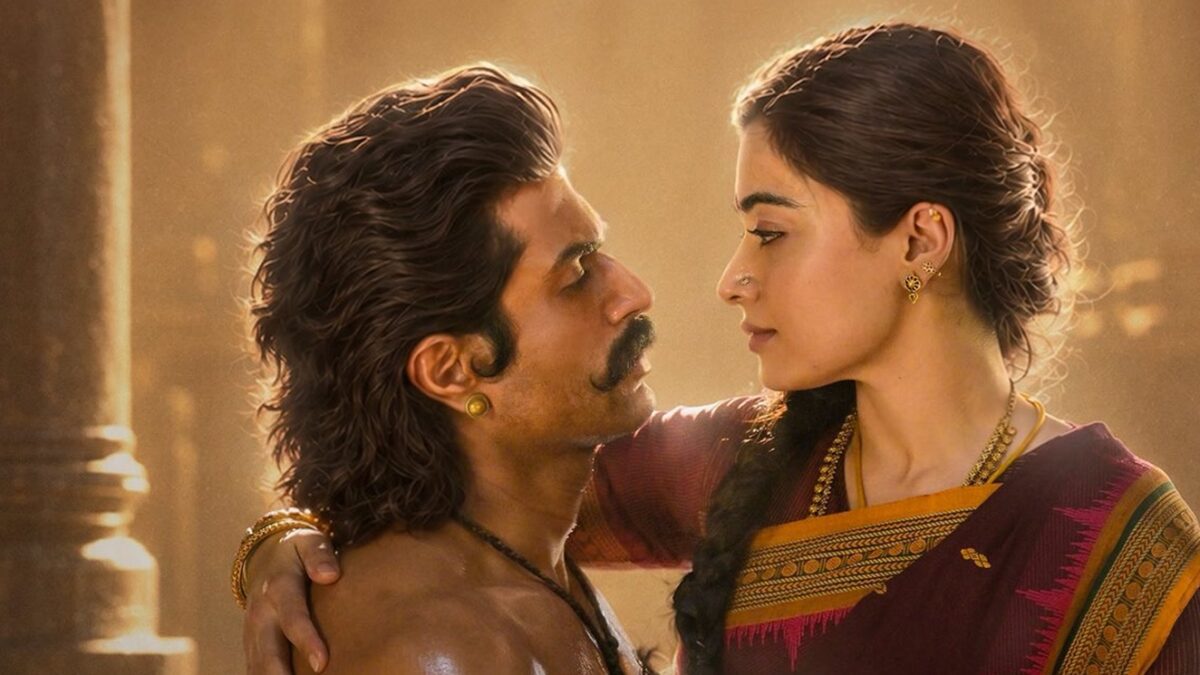
Ranabaali, written and directed by Rahul Sankrityan and produced by Mythri Movie Makers, reached theatres on 16 October 2026 in Telugu, with dubbed versions in Hindi, Tamil, Kannada and Malayalam. Vijay Deverakonda plays Singanamala Bobbili Ranabaali, a Rayalaseema warrior who rises against colonial officials during the Madras Famine of 1876–78, with Rashmika Mandanna as his wife Jayamma and Arnold Vosloo as the British commissioner Sir Theodore Hector. Our Ranabaali review verdict in one line: an honest, ambitious history lesson that keeps reaching for the sword when it should reach for the heart.
Story and screenplay
The premise is the film’s biggest asset. Sankrityan builds a mainstream drama around a famine that colonial grain policy made far deadlier, a chapter Telugu cinema has rarely touched, and that choice alone earns the film a good deal of goodwill. The first half, which sets up Ranabaali’s village, his marriage and the arrival of the British, moves with purpose and gives this world room to breathe. The trouble starts after the interval. The second half settles into a predictable cycle of atrocity and retaliation, each round restating what the film has already established, and in the final stretch the story seems to build towards an ending more than once before it actually gets there.
Direction
Sankrityan’s intent and research are never in doubt; the historical groundwork shows in the detail of village life and colonial administration. Where the film falters is balance. Scenes that could make the famine’s human cost land, the hunger, the losses, a community running out of options, are repeatedly cut short by another fight, and the sheer volume of cruelty on screen dulls its impact instead of deepening it. The violence becomes the point rather than the means. The exception is the cave action sequence, the best-staged set piece in the film and the one stretch where spectacle and stakes truly line up.
Performances
Rashmika Mandanna is the film’s clearest winner. Jayamma is warm, grounded and properly written, and the scenes she shares with Vijay Deverakonda, their first film together since Dear Comrade, are the strongest material on screen. Deverakonda’s commitment is not in question: his physicality and his handle on the Rayalaseema dialect give Ranabaali real presence. But once the warrior arc takes over, the performance narrows to anger and bravado, and the screenplay gives him little else to play. Arnold Vosloo looks the part of Sir Theodore Hector, but the commissioner is written as a stock colonial villain, and he leaves less of a mark than a film built on this conflict needs.
Music
Ajay-Atul’s background score is the film’s biggest disappointment. For a drama this dependent on mood, the music rarely lifts the key famine and battle passages; in the moments that need it most, it sits behind the scene instead of driving it. It works better in places during the quieter domestic portions, but that is not enough to make up for the big set pieces it leaves flat.
Technical craft
The production design is the film’s strongest department: the 1870s Rayalaseema setting, the costumes and the famine imagery are convincing and richly detailed, and they give Ranabaali a texture few period dramas manage. The cinematography by Jishnu Bhattacharjee and Nirav Shah serves that world well, particularly in the wide village and landscape frames. The editing is the weak link. At 2 hours 58 minutes, the film runs far longer than its story needs, and a tighter second half, with several of its repeated confrontations trimmed or merged, would have made it a much sharper film.
Ranabaali review verdict
Ranabaali is the kind of film you want to like more than you do. Watch it for Rashmika Mandanna, for the lead pair’s chemistry, and for a piece of history mainstream cinema has largely ignored. If you go, go to a theatre: the period design and scale are the reason to see it big. If graphic violence or a three-hour sit wears you down, this one will test you. The Scope Verdict: 2.5/5, a one-time watch.
Also read: Dasara box office: Jailer 2 races ahead as Ranabaali trails; Aadarsha Kutumbam yet to arrive · Jailer 2 Review: Rajinikanth’s swagger outlasts a thin sequel · Comrade Kalyan Review: Sree Vishnu’s Naxal comedy runs out of jokes