
Original bilingual journalism · English & తెలుగు

Guterres asks countries to start talks on a global framework for artificial intelligence risk
At the close of a summit on artificial intelligence safety in Barbados, UN Secretary-General Antonio Guterres asked member states to start talks and to develop within a year a multilateral framework for managing the technology's risks, and floated a global capacity fund.


Updated 03:44 IST, 25 November: UN Secretary-General Antonio Guterres has asked member states to start talks on managing the risks of artificial intelligence, and to develop within the next year a multilateral framework backed by independent and credible oversight. He made the call on Monday, 23 November, at the close of the Bridgetown Special Summit on Artificial Intelligence Safety in Barbados, which the United Nations co-hosted with the Barbados government. Nothing has been agreed: states have only been asked to begin discussions.
Why he wants a common foundation
Mr Guterres called artificial intelligence “the biggest transfer of power in the history of humankind”, moving influence from states to a small number of companies and individuals. Governments, he said, are “playing catch-up”, and the rules on risk remain fragmented. The technology’s models, he said, “cannot go faster than the capacity to control their safety”. He also repeated his support for a ban on autonomous weapons, calling a machine choosing whom to kill “absolutely unacceptable”.
Global institutions, he added, still “correspond to the reality of the world in 1945” and need reform; he said he would tell his successor that keeping control of artificial intelligence is necessary for humanity to keep control of the world. Mr Guterres leaves office at the end of December 2026, and no successor has been chosen.
What a framework could contain
In the framework he outlined, countries would agree on common safety measures and ways of testing systems, set safeguards and standards, require a basic level of transparency, and have the most advanced models independently evaluated and overseen. Every country, he said, would need help to put these in place. He also proposed a Global Fund for Artificial Intelligence Capacity-Building to narrow the gap between countries. At the first Global Dialogue on Artificial Intelligence Governance in July, he noted, 111 of the participating countries had never taken part in an artificial intelligence discussion before.
A brief released on Sunday by the UN-backed Independent International Scientific Panel on artificial intelligence urges countries to test systems in their own languages, because models perform worse in many of them. Panel member Vukosi Marivate said over a thousand languages already have the groundwork to narrow that gap.
What others at the summit said
French President Emmanuel Macron, in a video message, said the Paris Call for Artificial Intelligence Security has been signed by 18 heads of state or government and 11 leaders from the field, and argued that adherence to its principles should be a condition for access to markets. Microsoft Vice Chair and President Brad Smith said artificial intelligence is in some ways “moving faster than the speed of safety”.
Barbados Prime Minister Mia Mottley said small states rarely get to put their view on rules that affect them. She agreed that a frontier developer should pay if one of its agents hacked a bank in Barbados, and that her government should be able to cut off access to a model in an emergency.
Also read
- Bhashini and NIELIT sign MoU to bring multilingual artificial intelligence into technology courses in Indian languages
- Java update: CERT-In warns of high-risk flaw as Oracle ships 11 Java security fixes
- Instagram Teen Accounts: Meta takes age-estimation checks worldwide, moving suspected teens into restricted settings even with an adult birthday
Telugu Scope illustration.
More Stories
 TechnologyIndia’s space economy can reach $40-45 billion in under a decade, says Jitendra Singh; Gaganyaan in final phase
 TechnologyIndia has moved from technology consumer to creator, says Scindia, citing 2 lakh startups and cheaper data
 LifestyleNadda urges young doctors to adopt e-prescriptions and digitise patient records under ABHA
 TechnologyMicrosoft Ignite: Copilot Workspaces for people and agents, new models and HorizonDB on Azure
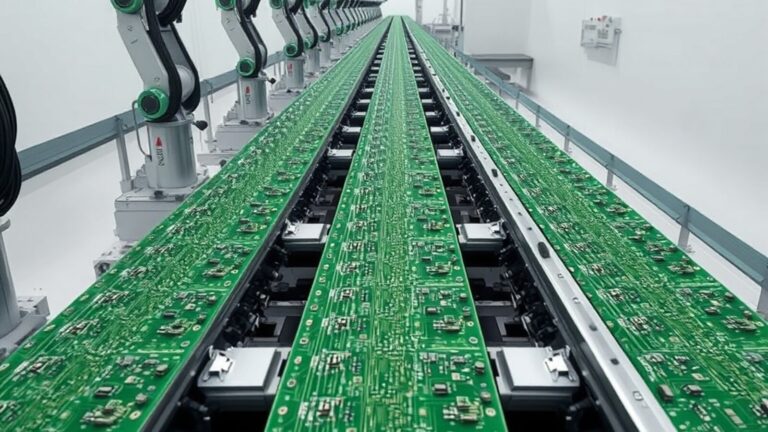 TechnologyIndia’s electronics exports rise 44 per cent to $31.97 billion in April-September; non-phone goods up 56.5 per cent
 TechnologyBhashini and NIELIT sign MoU to bring multilingual artificial intelligence into technology courses in Indian languages