
Original bilingual journalism · English & తెలుగు

Fresh delimitation Bills: 50% more seats in every state, Lok Sabha capped at 850, women’s quota to follow
The Union cabinet has cleared a new Constitution (132nd Amendment) Bill and a Delimitation (Second) Bill, due in the Lok Sabha on Monday, 30 November. They raise seats in every state by 50%, cap the House at 850, freeze each state's share until 2051 and bring in the women's quota after redrawing.

The Union cabinet on Friday, 27 November, cleared a fresh Constitution (132nd Amendment) Bill and a companion Delimitation (Second) Bill. Together they raise Lok Sabha and Assembly seats in every state by 50%, freeze each state’s share of seats until 2051 and bring in a women’s quota once constituencies are redrawn. The government plans to introduce them on Monday, 30 November, when the Lok Sabha reconvenes for its special sitting; the Rajya Sabha sits from 2 December. They follow the amendment the Lok Sabha defeated in April.
Who will redraw the map
The Centre would set up a three-member commission: a serving or former Supreme Court judge as chair, the Chief Election Commissioner or an Election Commissioner he nominates, and the State Election Commissioner of the state concerned. Each state gets up to ten associate members, five MPs and five legislators, who cannot vote.
The commission would publish draft boundaries, invite objections and hold public sittings in the states. Its final orders, published in the Gazette, would have the force of law and, under the Bill, could not be challenged in court. The Bill also repeals the Delimitation Act, 2002, and the existing Lok Sabha and Assemblies continue until they are dissolved.
Seats, freeze, census and quota
- Seats: every state and Union territory gets a uniform 50% increase in its Lok Sabha and Assembly seats. The Lok Sabha could have up to 850 members (815 from states, 35 from Union territories), and the ceiling for a state Assembly rises from 500 to 650. These are caps; the actual numbers will be fixed through delimitation.
- Freeze: the freeze on each state’s share of seats, due to end with 2026, is extended by 25 years to 2051.
- Census: boundaries inside states are to be drawn on the latest Census published when the amendment comes into force. The Census now under way has not been published, so the 2011 figures are the latest available.
- Women’s quota: one-third of Lok Sabha and Assembly seats, including seats for SC and ST women, takes effect after the first delimitation that follows the amendment. It runs for 15 years from the commencement of the 2023 amendment, and Parliament can extend it. Reserved seats are to rotate under a system Parliament will set by law.
Why a second attempt, and what comes next
The 131st Amendment Bill was put to vote in the Lok Sabha on 17 April and fell short of the two-thirds majority of members present and voting, with 298 in favour and 230 against. The new Bills spell out the 50% rise in the text and extend the freeze to 2051. A constitutional amendment needs a majority of the House’s total membership and at least two-thirds of the members present and voting.
What it means for the Telugu states
Because every state gets the same 50% rise and the freeze runs to 2051, Andhra Pradesh and Telangana would, on the Bills’ design, keep roughly the share of the House they hold now. Their actual seat numbers will be set by the commission, and reports on the Bills mention no rounding formula.
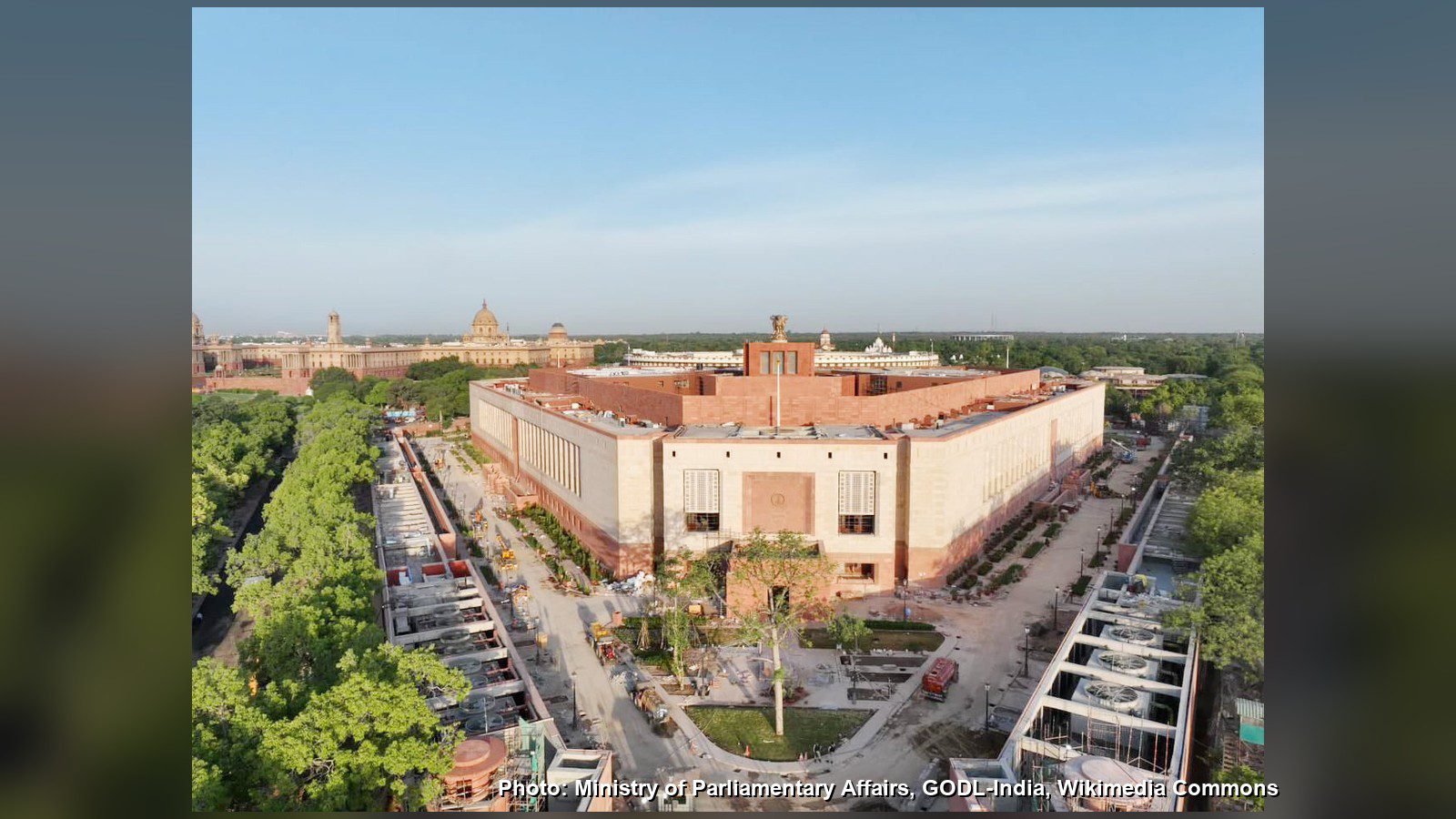
File photo: The new Parliament building in New Delhi, May 2023.
More Stories
 NationalNavy receives Vindhyagiri, the seventh and last Project 17A frigate, built at GRSE in Kolkata
 NationalParliament to meet again for special sittings: Lok Sabha on 30 November, Rajya Sabha on 2 December
 NationalIndia’s foodgrain output crosses 378 million tonnes in 2025-26, a record, says Agriculture Minister Chouhan
 NationalCabinet extends India Post’s Estates Management Scheme with Rs 1,491 crore through 2030-31
 NationalCabinet clears Rs 11,000 crore scheme for construction machinery, plus Silchar airport and a Kamarajar port terminal
 NationalConstitution Day: 77 years on, the Telugu leaders who helped shape it