
Original bilingual journalism · English & తెలుగు

TRAI port charges: ₹5.6 lakh a year cap on 1 Gbps links between telecom networks from 1 January 2027, first revision since 2012
The telecom regulator has, for the first time, capped what one operator can charge another for the IP ports that carry traffic between their networks. The ceilings apply from 1 January 2027.

TRAI port charges for the internet-protocol (IP) links that carry calls and data between telecom networks will have a fixed ceiling from 1 January 2027. The Telecom Regulatory Authority of India notified the Telecommunication Interconnection (Port Charges) (Third Amendment) Regulations, 2026 on Monday, 9 November.
Interconnection is what lets a customer of one operator call a customer of another. Under a 2001 regulation, the operator that asks for such a link pays the operator that provides it for the ports where its lines end. Those rates were written for old E1 ports, each carrying 2.048 Mbps, and TRAI had not changed them since 2012.
What the new caps are
The amended rules count IP ports, sized in Mbps or Gbps, as ports for the first time. The yearly charge for a 1 Gbps IP port can be no more than ₹5.6 lakh, and for a 10 Gbps port no more than ₹42.3 lakh. Two operators may settle on a lower amount, or on other port sizes priced by the same method.
The bigger port works out cheaper for each unit of capacity: ₹4.23 lakh a year per Gbps, against ₹5.6 lakh on the smaller one, about 24% less. The same IP-port charges apply to landline and mobile networks alike, and to national and international long-distance traffic. The earlier rates will now apply only to E1 ports.
Penalty and the road to the rules
For breaking specified provisions, TRAI has set graded financial disincentives of up to ₹15 lakh in a service area for every breach. The regulator’s press release does not say whether call or data tariffs paid by customers will change.
The review opened with a pre-consultation paper dated 3 April 2025, and a full consultation paper followed on 10 November 2025. Seventeen stakeholders sent comments and nine sent counter-comments, and an open house discussion was held on 28 January 2026. The new ceilings come into force on 1 January 2027.
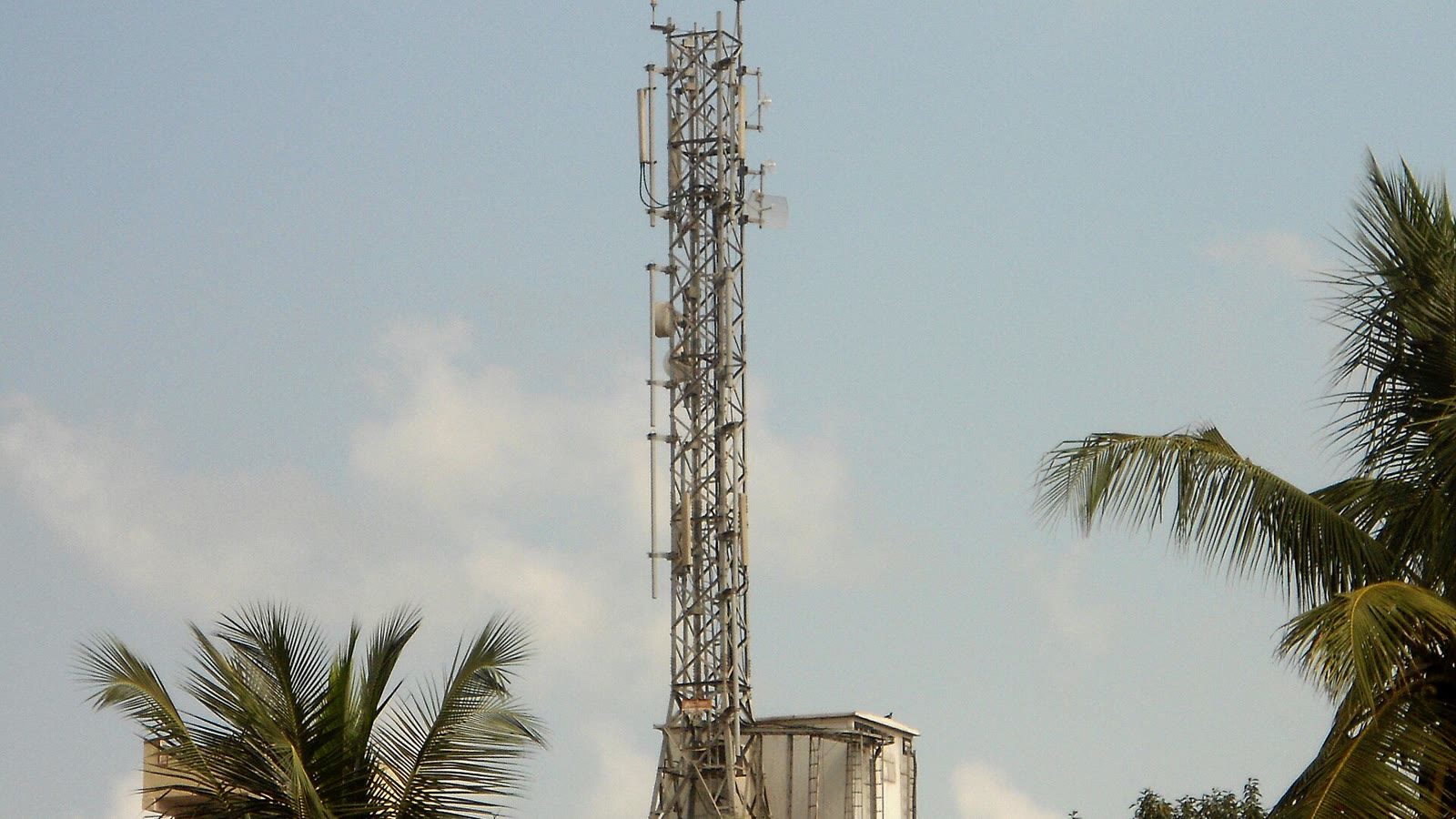
Representative image. A mobile communication tower in Kakinada. Photo: Adityamadhav83 / CC BY-SA 4.0 via Wikimedia Commons
More Stories
 TechnologySamsung Gallery sync moves to Google storage: 15 GB free, a new ‘Free up space’ option and how to switch it on
 TechnologyGemini task automation reaches India: Google’s assistant can book cabs and order food on Pixel 10, Pixel 11 and Galaxy S26 phones
 TechnologyInstagram Teen Accounts: Meta takes age-estimation checks worldwide, moving suspected teens into restricted settings even with an adult birthday
 TechnologyCERT-In names ‘CRAFTY FALCON’ behind attacks on NBFC and fintech payment systems, timed for holidays and weekends
 TechnologyAndroid security update: CERT-In rates flaws in Android 14 to 17 critical; how to check your phone’s patch level
 TechnologyStartup India portal links to I-STEM: 31,540 lab instruments at 4,044 institutions, Hyderabad’s CSIR labs among them