Original bilingual journalism · English & తెలుగు
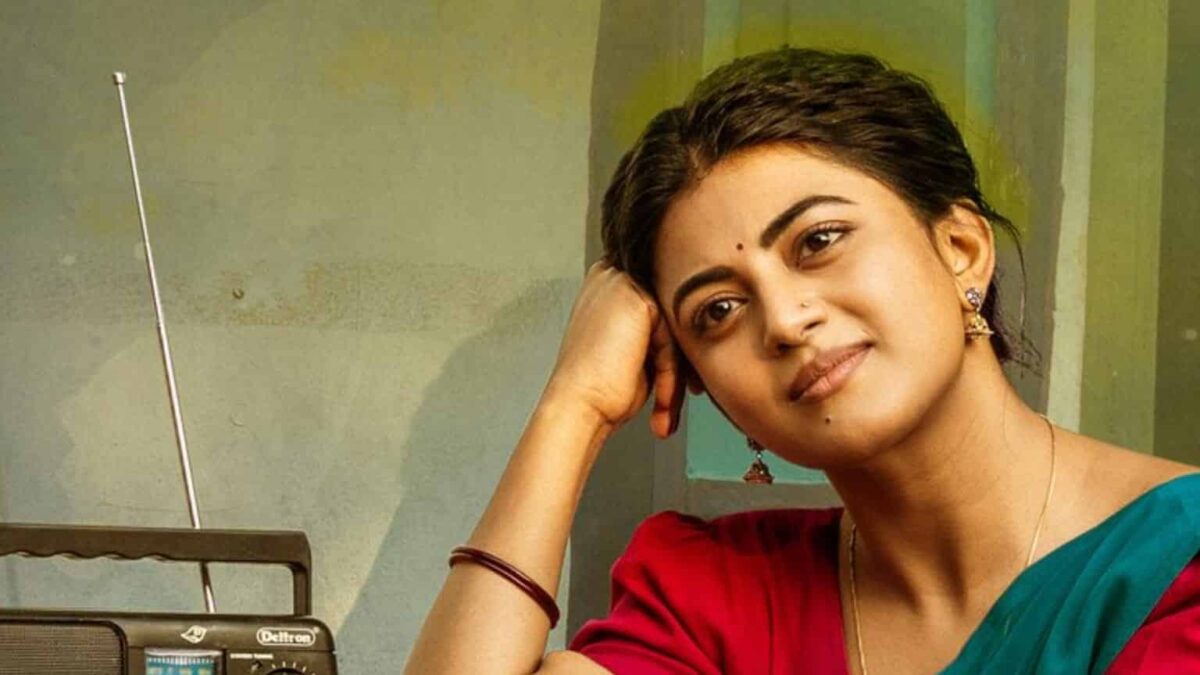
Garividi Lakshmi, which reached theatres on 17 October 2026, is a biographical musical drama about Reddy Vijaya Lakshmi, a Burra Katha performer from Garividi in North Andhra whose voice once travelled across the region on cassettes and stage shows before she slipped out of public memory. Written and directed by debutant Gowri Naidu Jammu and produced by T.G. Vishwa Prasad and Krithi Prasad under People Media Factory, it stars Anandhi in the title role. Our verdict in this Garividi Lakshmi review: a sincere tribute anchored by a fine lead performance, let down by plain and uneven writing, and a one-time watch.
Story and screenplay
The film follows Lakshmi from a village childhood and an early, failed marriage to her training in Burra Katha, her rise as a stage artist and the betrayals that came with fame. This is a life that deserves the screen; the trouble lies in the telling. The opening stretch is crowded rather than gripping, stacking one performance and one song on top of another, and it hurries Lakshmi towards success before we have been given a reason to invest in her. The second half, where her personal losses begin to pile up, finally finds some dramatic weight, but it keeps circling the same beats of exploitation and heartbreak until they turn predictable. What stays with you is the pre-climax and climax, where the film at last earns the emotion it has been reaching for.
Direction
Gowri Naidu Jammu deserves credit for choosing a forgotten folk artist over a safer subject, and for handling grief without tipping into melodrama. His ear for the North Andhra dialect is a genuine strength; these characters sound lived-in. But the narration is simple to a fault, and a life this eventful plays out with surprisingly little tension. The shape of the film, from rise to fame to a slow unravelling at the hands of those closest to her, owes an obvious debt to Mahanati, and the comparison does it no favours. As a first film it shows promise, but the writing needed more ambition than it gets.
Performances
Anandhi is the best thing in Garividi Lakshmi. She has a confident stage presence, moves through the Burra Katha and dance sequences with ease, and carries Lakshmi through both her triumphs and her collapse with conviction. A few of the more intense moments needed a wider emotional range, yet she is the one holding the film together. Rag Mayur is effective in a role that turns from warmth to arrogance after success, and VK Naresh brings weight to a limited but important part, particularly in the closing portions. Raasi and Ankith Koyya are fine in smaller roles.
Music
In a film about a singer the music has to work, and Charan Arjun mostly delivers. His score suits the folk setting, and his reworking of Lakshmi’s own popular songs is the soundtrack’s high point. Only a couple of the new songs leave a mark, the emotional number in the climax being the strongest of them. The second half carries more songs than it needs, and they drag an already sagging stretch further.
Technical craft
Production values are solid for a film of this scale. Aditya Javvadi’s cinematography captures the village locations and the stage sequences naturally, without prettifying either. Ravi Teja Girijala’s editing is the weak link: the first half needed tighter cutting, and the repetitive later stretches could have lost several minutes without losing anything of value.
Garividi Lakshmi review verdict
Garividi Lakshmi is a respectful tribute that is easier to admire than to enjoy. Viewers drawn to folk art, real-life stories and strong lead performances will find enough in Anandhi’s work and the moving final act. Those looking for brisk storytelling or mainstream entertainment may find the 2 hour 21 minute runtime long. Given its modest scale and slow stretches, it is best watched at home when it arrives on OTT.
Also read: Crazy Kalyanam Review: Naresh steadies a familiar father-daughter tale · Comrade Kalyan Review: Sree Vishnu’s Naxal comedy runs out of jokes · Ranabaali Review: A sincere famine epic, worn down by its own violence