Original bilingual journalism · English & తెలుగు
HIV prevention is slipping as funding dries up: 446,000 fewer people across reporting countries used preventive pills in 2025, UNAIDS says
UNAIDS says donor funding cuts cost reporting countries 446,000 PrEP users in 2025, while 32.1 million of 40 million people with HIV remain on treatment and low- and middle-income countries face a $4.3 billion gap.

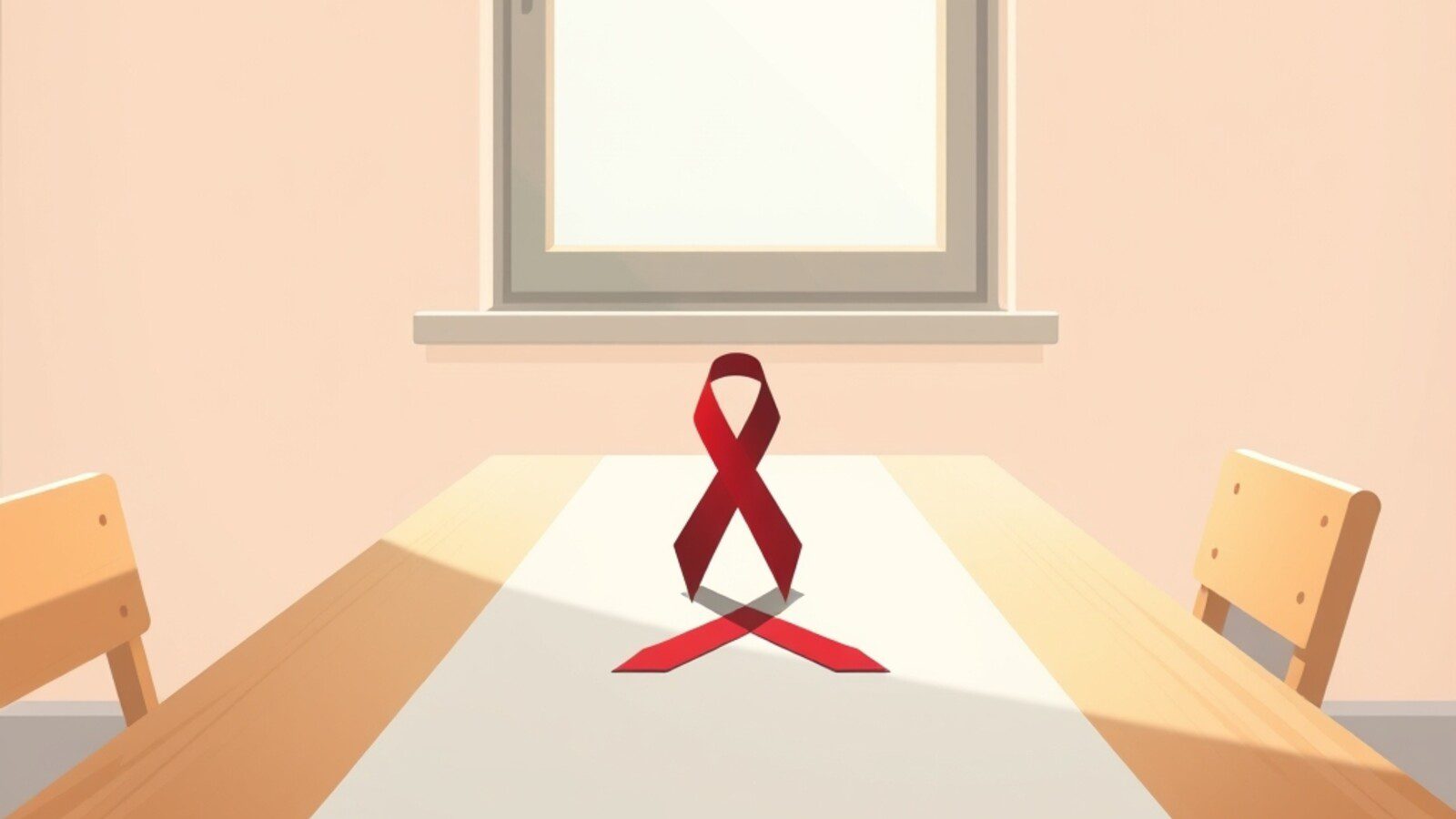
Cuts in HIV funding are now visible in prevention figures. UNAIDS said in a report released on Tuesday, 24 November, that about 446,000 fewer people across reporting countries accessed pre-exposure prophylaxis (PrEP), the preventive medicine for people at risk of HIV, in 2025 than in 2024. The report came a week before World AIDS Day on 1 December.
Prevention has taken the hardest hit
PrEP use fell by 59% among sex workers, 58% among people who inject drugs, 23% among transgender people and 17% among gay men and other men who have sex with men. Condom distribution dropped from 3 billion to 2.7 billion between 2024 and 2025, and voluntary medical male circumcision fell 53% across the priority countries. New options such as lenacapavir, a PrEP injection needed only twice a year, are available, but UNAIDS said prevention programmes have been particularly hard hit by the cuts.
Treatment holds, but the gap is wide
Of the roughly 40 million people living with HIV, 32.1 million are on treatment. Low- and middle-income countries still face a funding gap of $4.3 billion. Many depend heavily on money from outside: external sources make up up to 98% of HIV resources in Nigeria, 94% in Mozambique and 80% in Uganda, and in many affected countries debt payments are two to three times government health spending.
Advanced HIV disease killed about one in eight of the 3.4 million people affected worldwide in 2025, and testing for advanced disease fell 35% across six countries between 2024 and 2025.
Community groups stretched thin
A study cited by UNAIDS found that more than three-quarters of surveyed civil society organisations reported service disruptions, and over 80% were working at less than half their capacity by the end of 2025. “Community organizations are not an optional extra,” said UNAIDS Executive Director Winnie Byanyima.
What is still possible
UNAIDS said the 2030 goal of ending AIDS as a public health threat is still within reach. Meeting it would prevent 3.2 million new HIV infections and 1.3 million AIDS-related deaths by 2030.
Also read
- Afghan women losing access to health care as edicts and funding cuts bite, UN agencies warn
- Five women and girls were killed every hour by partners or relatives in 2025, UN agencies report as 16 Days of Activism begin
- WFP seeks $12.1 billion to reach 91 million people in 2027 as hunger crisis deepens
Telugu Scope illustration.
More Stories
 InternationalIndian Ocean Rim ministers gather in Delhi on Friday; EU and IORA hold first maritime security roundtable
 InternationalAbout 350,000 children in encircled Taiz, Yemen missed measles-rubella vaccination as vaccines cannot reach them, UN says
 InternationalFive women and girls were killed every hour by partners or relatives in 2025, UN agencies report as 16 Days of Activism begin
 InternationalEarthquake of magnitude 5.3 to 5.6 strikes eastern Nepal; tremors felt in Sikkim, North Bengal and Bihar
 InternationalZelenskyy says Ukraine hit Russian ships at Benghazi; UN mission seeks independent investigation
 InternationalUN says Gaza war has erased 77 years of human development, calls for access and a two-state path