
Original bilingual journalism · English & తెలుగు
Rajnath Singh flies to Dushanbe to lead India at SCO heads of government meeting
The Defence Minister is India's representative at the two-day council in the Tajik capital, where the regional grouping will discuss trade, connectivity and investment and take decisions on its own budget and institutions.

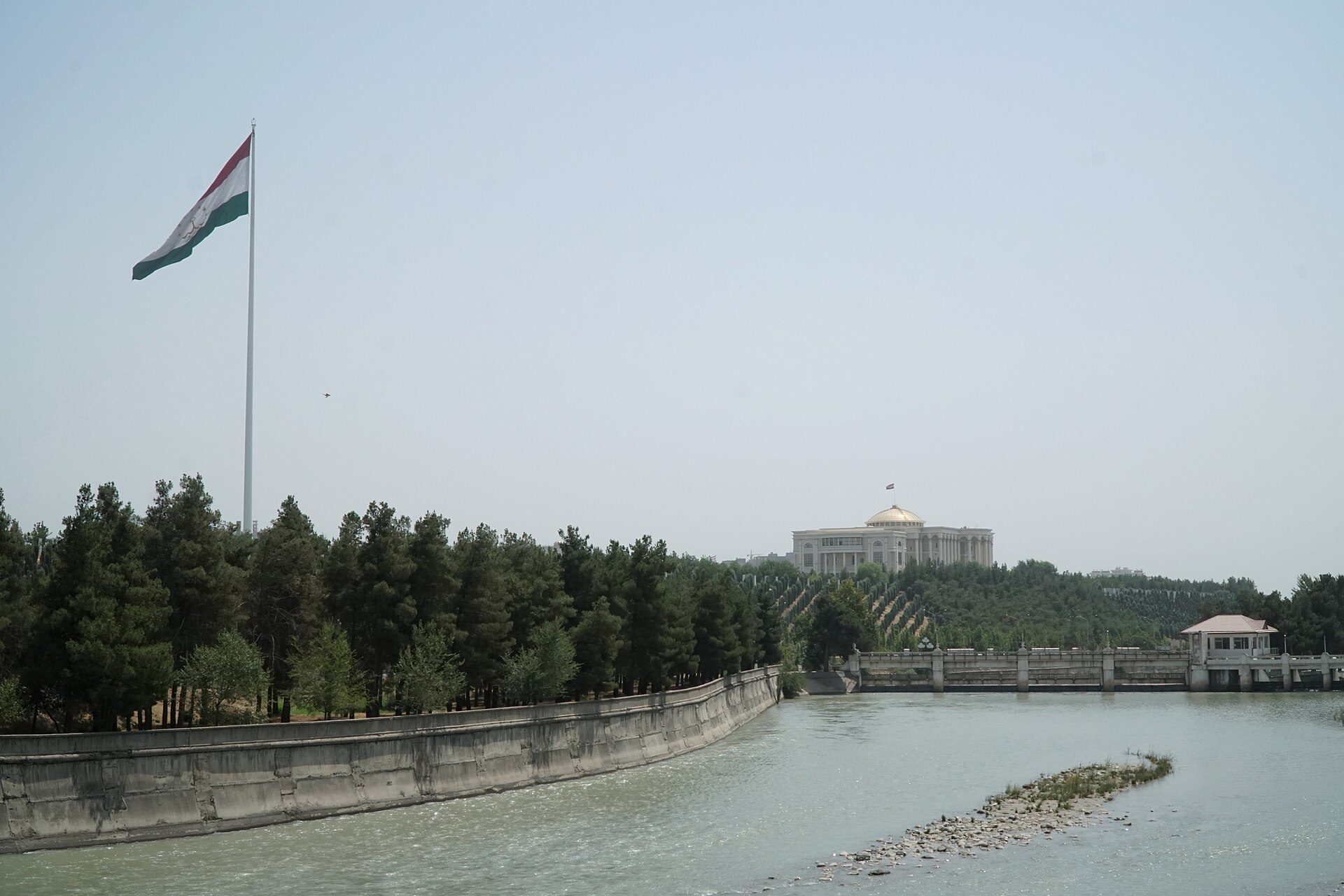
Defence Minister Rajnath Singh travelled to Dushanbe on Monday, 19 October, to represent India at the SCO heads of government meeting, the 25th session of the Shanghai Cooperation Organisation‘s Council of Heads of Government, held over two days in the Tajik capital on 19 and 20 October.
Singh left New Delhi on the morning of 19 October and announced his departure on X, saying the meeting would deepen cooperation among member countries in the economy, connectivity, innovation, investment, culture and people-to-people contacts.
According to the Ministry of Defence, the council will take stock of the SCO’s existing cooperation programmes and consider decisions on the organisation’s financial and institutional functioning. The ministry said the meeting gives India an opportunity to exchange views with other members on practical cooperation that benefits all sides.
India, the ministry noted, takes an active part in several SCO mechanisms, including those on start-ups and innovation, digital public infrastructure and exchanges between citizens of member states.
The previous session of the council took place in Moscow on 18 November 2025, when External Affairs Minister S. Jaishankar led the Indian delegation.
What the council does
The SCO has two top-level forums. The Council of Heads of State, the annual summit of presidents and prime ministers, sets the organisation’s political direction. The Council of Heads of Government, which meets at prime-ministerial level, is the second-highest body and handles the practical side: economic and trade cooperation, transport and connectivity projects, and approval of the organisation’s annual budget.
Member governments may send a senior minister in place of the head of government, and India has usually done so for this forum, nominating a cabinet minister to lead its delegation.
The grouping now has ten members: Belarus, China, India, Iran, Kazakhstan, Kyrgyzstan, Pakistan, Russia, Tajikistan and Uzbekistan. Afghanistan and Mongolia are observers, and around 15 countries are dialogue partners.
Why the SCO heads of government meeting matters for India
Central Asia sits at the heart of India’s efforts to build trade routes to the region, and the SCO is one of the few forums where India meets the Central Asian republics, Russia, China and Pakistan at the same table. Discussions on connectivity and investment at Dushanbe bear directly on those plans, while India has also been promoting its experience with digital public infrastructure and start-ups among member states.
The meeting also comes ahead of the next SCO summit of heads of state, which Pakistan is due to host in 2027. No bilateral meetings for Singh on the sidelines of the two-day Dushanbe session had been announced when the meeting opened.
Also read: Rubio says US is ‘very close’ to trade deal with India ahead of Mumbai talks · Cockroach movement founder Abhijeet Dipke freed on conditions after Delhi detention
The Dushanbe Flagpole and the Palace of Nations in the Tajik capital, host of the SCO Council of Heads of Government meeting on 19 and 20 October. File photo. Photo: Adam Harangozó / CC BY-SA 4.0 via Wikimedia Commons
More Stories
 NationalEurope’s summer heat killed more than 50,000 city residents, a new study finds
 NationalDelhi High Court refuses to quash Neha Bora’s peace-bond notice, but tells magistrate to give her all the material first
 NationalIndians caught up in two Gulf-region incidents: 14 on a yacht off Yemen, 21 on a tanker near Hormuz
 NationalDelhi’s air turns ‘poor’ for the first time this season; GRAP Stage I comes into force across NCR
 NationalModi at world summit: Global South needs a bigger say, and the Congress is in his line of fire
 NationalRubio and Jaishankar take up energy, defence and trade in Mumbai talks