Original bilingual journalism · English & తెలుగు

PLI scheme for medical devices reopens with Rs 2,700 crore, runs to 2035-36; five earlier approvals named Visakhapatnam, Medak, Hyderabad
The Department of Pharmaceuticals has extended the production-linked incentive scheme for medical devices to 2035-36 and invited fresh applications, with about Rs 2,700 crore available. Component makers need no minimum investment.

The Centre has reopened the PLI scheme for medical devices to new applicants and extended it to 2035-36, with about Rs 2,700 crore left to pay out, the Department of Pharmaceuticals said on Tuesday, 10 November. An online portal for applications is to open within 10 days of the announcement. Andhra Pradesh and Telangana already figure in the scheme: five entries in the department’s list of approvals dated 25 November 2024 named Visakhapatnam, Medak or Hyderabad as a place of manufacture.
A production-linked incentive pays a company a percentage of the additional sales of goods it makes in India. Since this one began in 2020-21, the department said, more than 60 high-end devices and components have gone into local production, among them CT scanners, 1.5-tesla MRI machines, cath labs, dialysers and cardiac implants, with output worth over Rs 16,000 crore. Its approved outlay is Rs 3,420 crore.
What changes for smaller makers
Guidelines issued the same day set up four segments: consumables, disposables and implants; critical components; high-end devices barely made in India; and those only assembled here. A firm with average annual turnover below Rs 150 crore over three years must invest at least Rs 50 crore in three of the segments. Larger firms and all component makers face no minimum investment, and the minimum sales needed before claiming money have been dropped.
Components share the highest rate with the third segment: 10% of eligible sales for three years, 8% in the fourth and 6% in the fifth, if the maker achieves the value-chain integration it commits to. On a product with no earlier sales, that is Rs 10 lakh for every Rs 1 crore sold in the first year. A maker that falls short gets 7%, or Rs 7 lakh. Consumables and implants earn 7% for two years and 3% in the final two.
Five approvals in the Telugu states
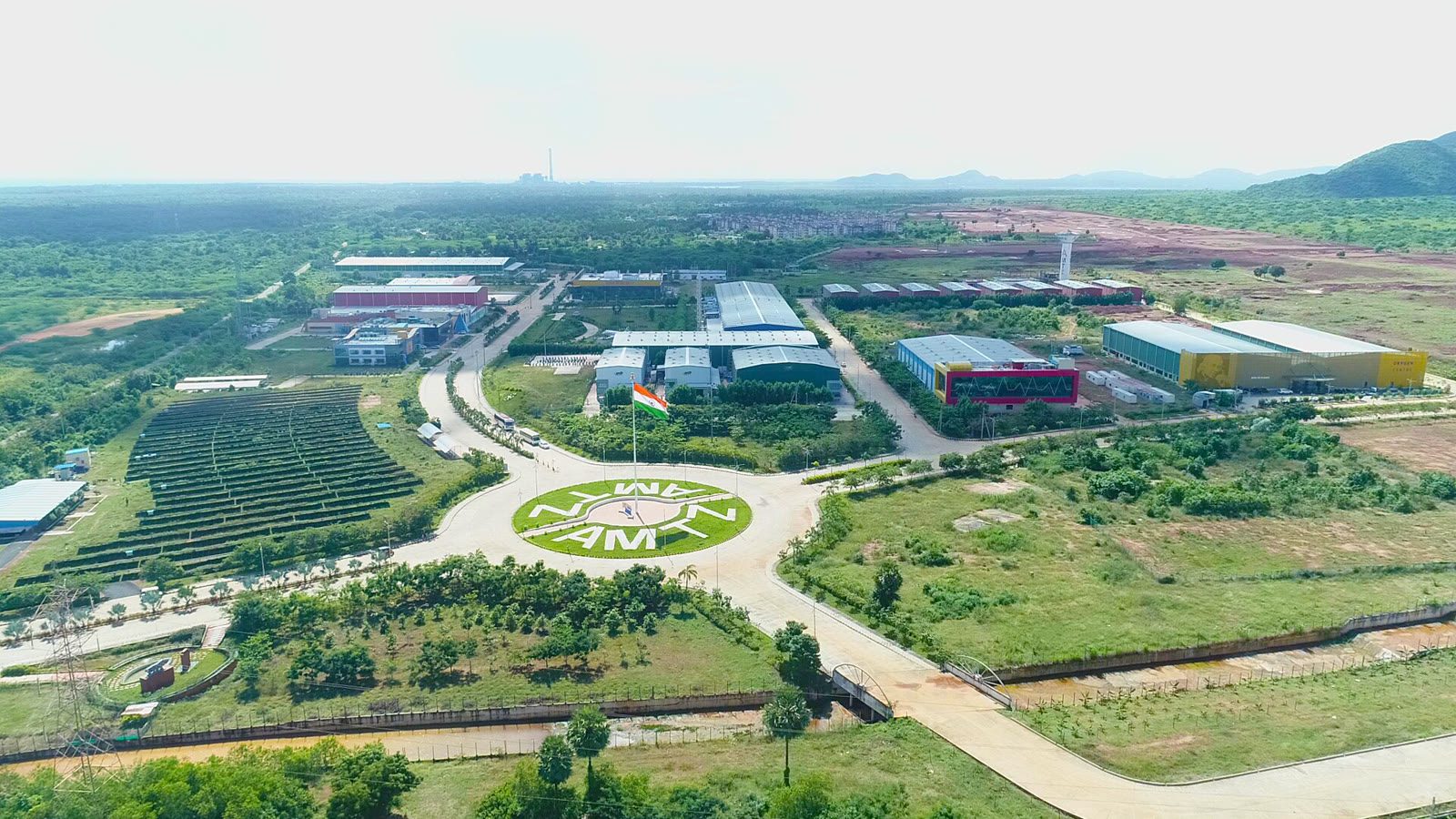
The 2024 list had 32 approvals. Three named Visakhapatnam, home of the Andhra Pradesh MedTech Zone: Trivitron Healthcare, whose approved products include CT scanners; Innvolution Healthcare, listed for stents and balloon catheters; and Varex Imaging Manufacturing India, for digital X-ray detectors. Two named Telangana: Sahajanand Medical Technologies, whose entry lists Medak along with Surat for stents, heart valves and heart occluders, and Majik Medical Solutions in Hyderabad for catheter tubing. The zone’s website counts more than 100 companies on its campus.
Applications reaching the portal before a month ends will be settled within 60 days. Each carries a non-refundable fee of Rs 1 lakh. Spending on land and buildings does not count as investment. An approved company gets up to three years to set up its plant and up to five years of incentive after that. The department will publish the method of applying on its website.
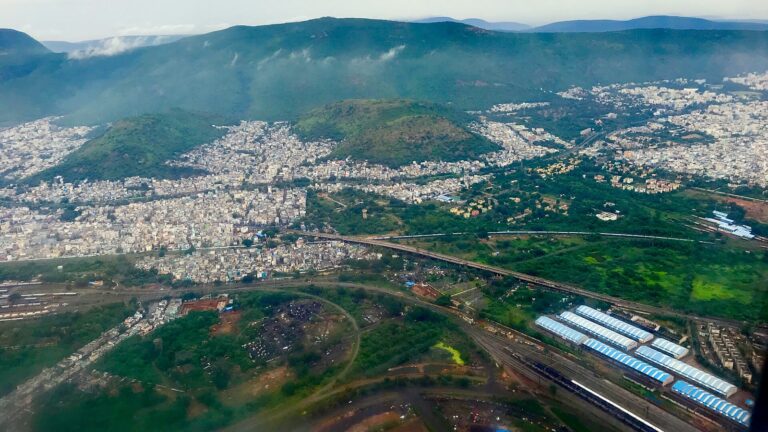
An aerial view of the Andhra Pradesh MedTech Zone campus in Visakhapatnam. File photo. Photo: Amtzwiki / CC BY-SA 4.0 via Wikimedia Commons
More Stories
 BusinessAndhra Pradesh unemployment rate at 7.8%, Telangana at 6.4% in July-September, both above India’s 5.1%
 BusinessNifty 50 closes at 25,044.65 as banks rally; Hyderabad pharma stocks rise again, no IBJA gold rate on Monday
 BusinessVizag data centre: AdaniConneX completes Rs 1,085.51 crore purchase of a land-holding company from Adani Infra; 400 MW planned in the city
 BusinessRBI repo auction: banks can borrow Rs 50,000 crore for four days on Monday, after five auctions that soaked up spare cash
 BusinessMuhurat trading: Nifty slips below 25,000 to close at 24,986 as banks fall; Hyderabad’s Divi’s Labs jumps 7.5%
 BusinessRBI FDI census: foreign investment in India rises 8.5% to Rs 70.72 lakh crore but falls in dollars; Indian money in UAE grows 2.6 times