
Original bilingual journalism · English & తెలుగు
Italy toughens protest and juvenile-crime laws after Milan riots; Indian embassy urges caution
Italy's cabinet approved an emergency security decree on 20 October after violent protests in Milan. A day earlier the Embassy of India in Rome told Indian nationals to avoid crowds and protest sites.

Italy’s Council of Ministers approved an emergency decree on public security and juvenile crime on 20 October, after cost-of-living protests turned violent in Milan on 18 October. A day before the decree, the Embassy of India in Rome advised Indian nationals in Italy to stay away from crowds and protest sites.
What the decree changes
The decree-law, proposed by Prime Minister Giorgia Meloni with the interior, justice and defence ministers, creates a new offence of organised violence at public demonstrations: joining a group of at least five that throws objects or dangerous devices and puts people at real risk. Organisers and those inciting it, including online, face heavier penalties.
Police can already hold people for up to 12 hours around demonstrations; that power now also covers police operations in crowded places, where there are concrete grounds to see a person as a danger. Minors aged 14 and above are presumed able to understand their actions unless proved otherwise, and parents face administrative penalties when their children take part in certain offences. Another 500 soldiers will patrol Milan until 31 December 2026. Parliament has 60 days to convert the decree into law.
What the embassy said
The embassy asked Indians to exercise caution, avoid crowded areas and places where protests are under way, and follow local news. It does not ask anyone to leave Italy. In an emergency, Indians can call the Embassy in Rome on +39 331 614 2085 or the Consulate General in Milan on +39 388 164 7527.
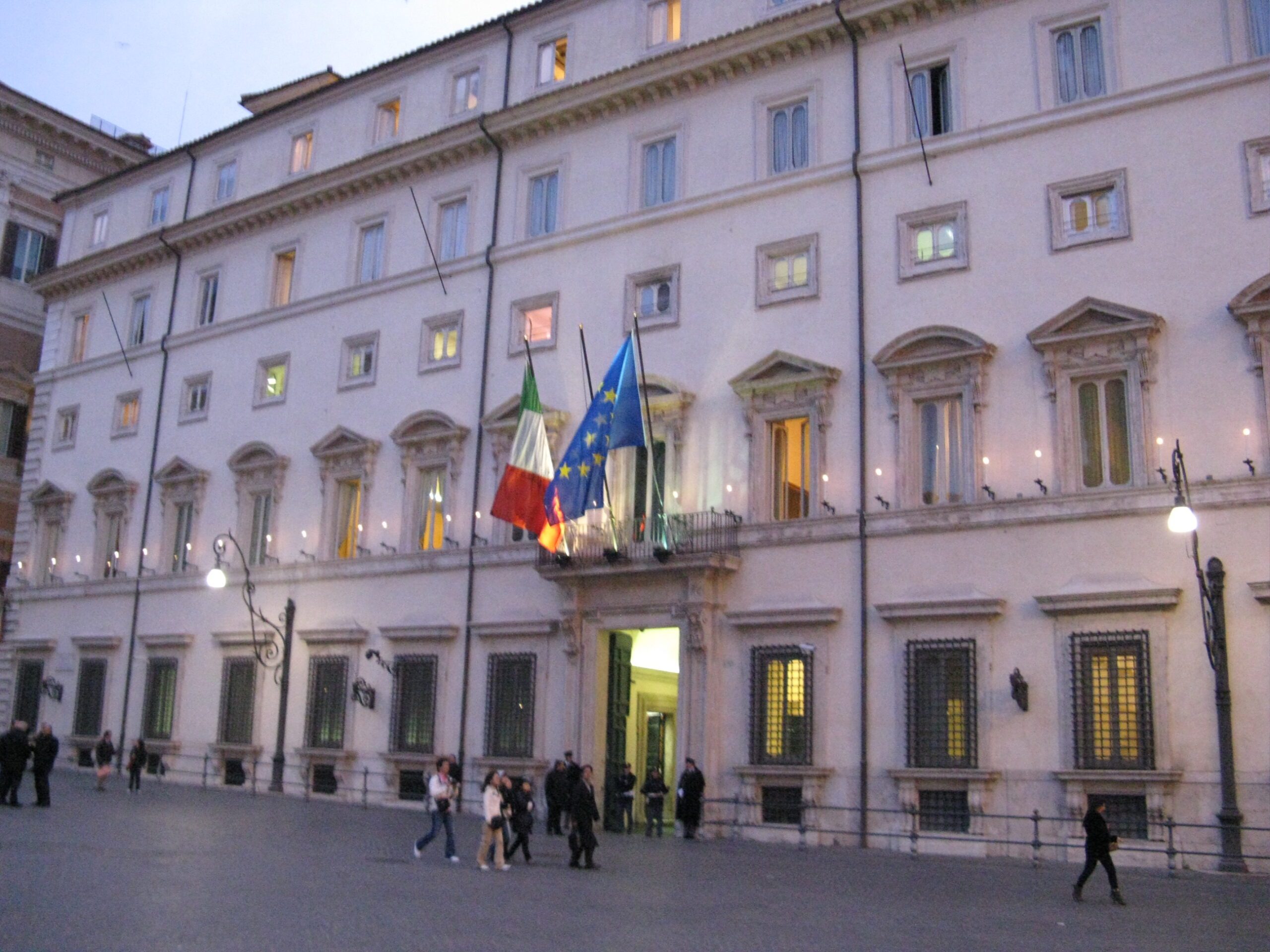
Palazzo Chigi in Rome, the seat of the Italian government, where the Council of Ministers approved the decree on 20 October. File photo. Photo: Arepo / Public domain via Wikimedia Commons
More Stories
 NRIIndian resident among two dead after attack on Saudi Arabia’s Dammam airport; embassy in touch with families
 NRIInstacart to pay $5 million to settle US claims its green-card hiring favoured visa holders
 NRIFrom Dubai to Vienna, Telugu families abroad keep Bathukamma and Dasara alive
 NRIVance admits ‘indentured servants’ jibe was poorly put, but green-card freeze on eight tech firms stays
 NRITeen charged over alleged plot to attack Indians at Aurora’s Balaji temple
 NationalEurope’s summer heat killed more than 50,000 city residents, a new study finds